
Manual keyword research still fails at the same structural level it did a decade ago. It identifies searchable phrases but struggles to explain intent, context, and topical depth.
Search volume and keyword difficulty can describe demand, but they cannot explain how search engines interpret relationships between queries.
This limitation has become more visible as SEO has shifted away from exact match optimization toward topic-level relevance.
Traditional keyword tools operate on lexical logic. Queries are treated as strings of text rather than expressions of meaning.
As a result, terms that look different but represent the same intent are handled as separate opportunities.
Content teams publish multiple pages targeting slight variations, only to find that those pages compete against each other.
Rankings decline not because the content quality is poor, but because the underlying query understanding is shallow.
Search intent today is semantic, not literal. Google evaluates context, entity relationships, and conceptual similarity when ranking content.
Pages succeed when they demonstrate topical authority across a subject area, not when they repeat a specific phrase.
This change fundamentally alters the role of AI keyword research. Instead of locating words to insert into content, it now maps intent clusters and determines how topics should be structured across a site.
AI keyword research tools built on semantic analysis respond directly to this shift. They use Natural Language Processing, vector analysis, and entity modeling to understand how search engines group queries and evaluate relevance.
These tools help answer questions traditional platforms cannot: which keywords belong on the same page, which should be separated, and where topical gaps exist based on authority rather than volume alone.
This article examines six AI keyword research tools designed specifically for semantic research rather than keyword harvesting.
Each tool is evaluated based on research depth, data accuracy, and practical SEO application.
The goal is not promotion or feature comparison, but clarity. For experienced practitioners, AI keyword research is not a shortcut. It is a more accurate way to think about search behavior.
How These Tools Were Assessed
To ensure neutrality and consistency, all six tools were evaluated using a single framework applied across the analysis.
This framework focuses on how AI keyword research functions in real SEO workflows rather than how many features a platform offers.
The first criterion was semantic analysis depth. This includes how each tool handles intent classification, topic clustering, entity detection, or topic modeling.
Tools were prioritized where semantic processing forms the core logic of research output rather than a supplementary layer.
Second, data source transparency was assessed. Tools that rely on live SERP behavior.
Knowledge Graph entities, or proprietary semantic models were evaluated differently from platforms that depend primarily on static keyword databases.
Understanding where the data originates matters for interpreting results.
Third, SEO workflow actionability was considered. Each tool was evaluated based on where it fits within research, planning, optimization, or auditing workflows.
Tools that produce insights without clear application were scored lower in practical value.
Fourth, accuracy versus overgeneration was reviewed. Some AI systems produce extensive keyword or topic lists without sufficient semantic justification.
Tools that favor precision over volume were considered more reliable.
Finally, learning curve and pricing realism were factored in, particularly for SMBs and editorial teams.
This framework establishes credibility, reduces perceived bias, and ensures the comparison reflects practical AI keyword research use rather than theoretical capability.
Tools Breakdown
Keyword Insights
Category: AI Keyword Research / Semantic SEO
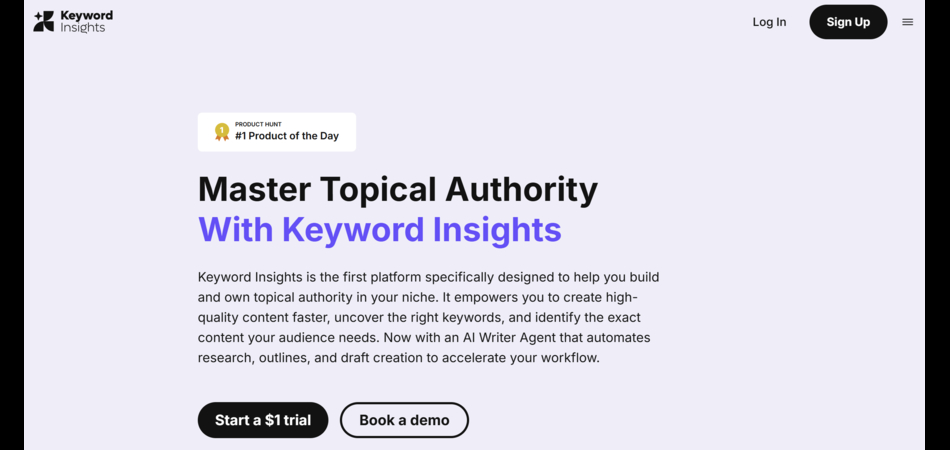
What it does: Keyword Insights clusters keywords based on how search engines rank URLs across queries, rather than relying on textual similarity or keyword modifiers.
How it uses AI for keyword research: Machine learning models analyze live SERP overlap. If the same URLs rank for multiple queries, the tool groups those queries into a single semantic cluster, indicating shared intent.
Semantic analysis capability: Strong. Clustering is based on real ranking behavior rather than inferred similarity. The tool also identifies hub-and-spoke relationships, supporting structured site architecture.
SEO workflow fit: Keyword Insights is best used in high-level research and auditing. It is especially helpful with the keyword cannibalization, content overlapping, and content architecture decision-making.
Data reliability & limitations: Because it uses live SERP data, grouping accuracy is high. However, output is spreadsheet-heavy and requires analytical comfort. It does not replace full SEO suites for tracking or backlinks.
Pricing: There are pay-as-you-go options. The subscriptions begin at approximately 58/month.
Best for: Established sites with large content libraries needing semantic clarity.
InLinks
Category: AI Keyword Research / Semantic SEO
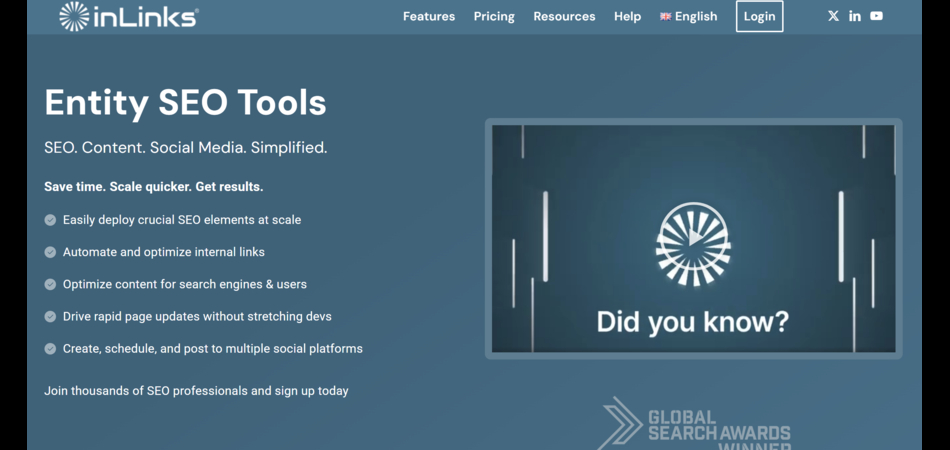
What it does: InLinks analyzes content through entities rather than keywords, focusing on the concepts search engines associate with a topic.
How it uses AI for keyword research: A proprietary semantic analyzer extracts entities from content and maps them to Knowledge Graph concepts, identifying gaps and relationships.
Semantic analysis capability: Very strong. Entity detection, topic association mapping, and semantic schema generation are core functions, not secondary features.
SEO workflow fit: InLinks is most effective for optimizing existing content, strengthening topical signals, and automating internal links based on semantic relevance.
Data reliability & limitations: Entity modeling is accurate, but the conceptual shift from keywords to entities creates a steep learning curve. Credit-based pricing can limit large-scale usage.
Pricing: Limited free tier. Paid plans start at $39–$49/month.
Best for: Advanced SEO teams focused on entity-driven optimization.
MarketMuse
Category: AI Keyword Research / Semantic SEO
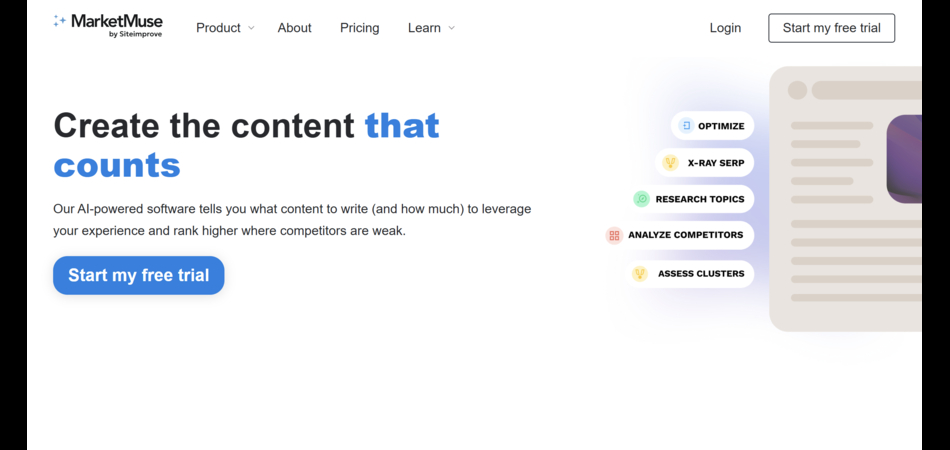
What it does: MarketMuse evaluates what comprehensive topic coverage looks like by analyzing thousands of pages on a subject.
How it uses AI for keyword research: AI-driven topic models identify semantically related concepts and assess content inventory against those models.
Semantic analysis capability: Advanced. The platform measures topical depth and relevance rather than keyword density or frequency.
SEO workflow fit: MarketMuse fits strategic planning workflows. It informs decisions about what content to create to build authority over time.
Data reliability & limitations: Data quality is high, but processing large inventories can be slow. The platform emphasizes topic value over traditional search volume metrics.
Pricing: Very limited free tier. Paid plans start at $99/month.
Best for: Mature sites pursuing long-term topical authority.
WriterZen
Category: AI Keyword Research / Semantic SEO
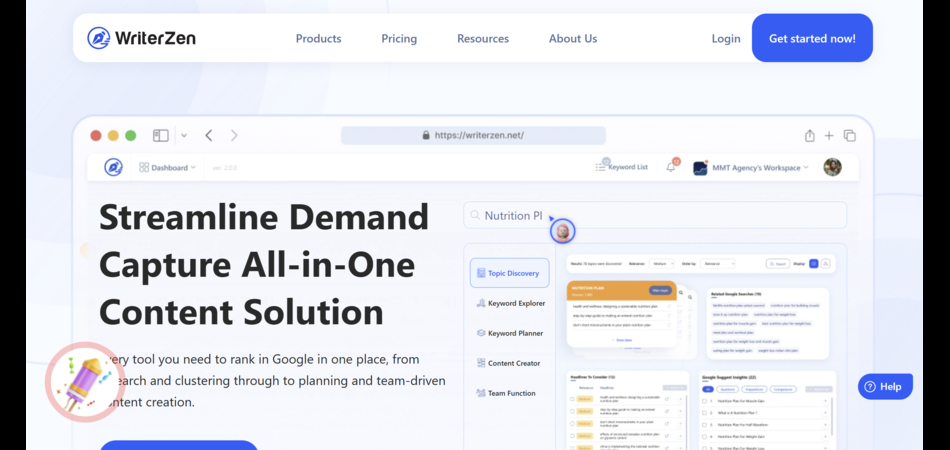
What it does: WriterZen discovers long-tail keyword opportunities and organizes them into semantic clusters.
How it uses AI for keyword research: AI-driven clustering groups keywords by semantic closeness and ranking probability, with visual intent segmentation.
Semantic analysis capability: Moderate to strong. The tool focuses on topic discovery and clustering rather than deep authority modeling.
SEO workflow fit: WriterZen is most useful during early-stage research, niche exploration, and initial content planning.
Data reliability & limitations: Search volume relies on standard Google data. Advanced checks consume credits quickly.
Pricing: Cluster-only plans start at $19/month.
Best for: New blogs and solo creators mapping unfamiliar niches.
Scalenut
Category: AI Keyword Research / Semantic SEO
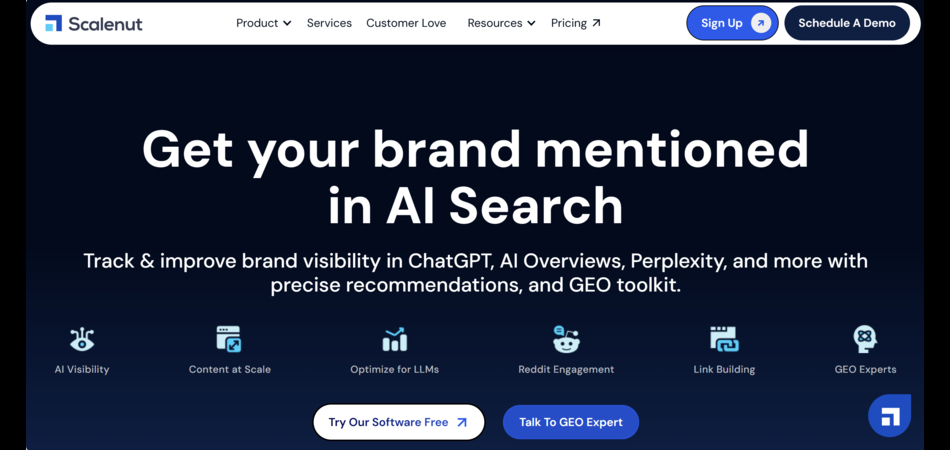
What it doesScalenut generates topical maps that outline pillar pages and supporting content.
How it uses AI for keyword researchAI extracts NLP terms from ranking pages to build structured content hierarchies aligned with intent.
Semantic analysis capabilityStrong for planning. Automated topical maps simplify content structure decisions.
SEO workflow fitScalenut bridges research and execution, turning semantic analysis into content briefs.
Data reliability & limitationsEffective for planning but lacks granular competition metrics.
PricingPlans start around $22–$39/month.
Best forTeams prioritizing speed and structure.
Twinword Ideas
Category: AI Keyword Research / Semantic SEO
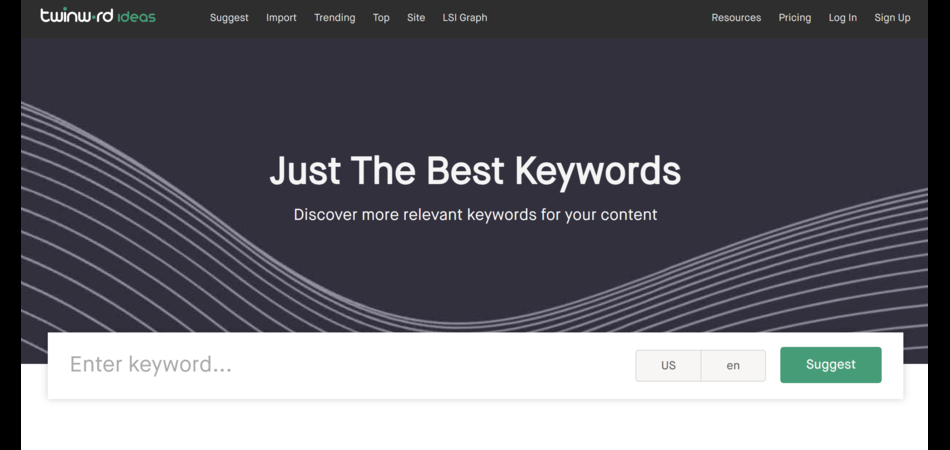
What it does: Twinword filters keyword lists based on relevance and intent.
How it uses AI for keyword research: NLP scores keyword relevance and classifies intent into Know, Do, and Buy categories.
Semantic analysis capability: Focused. Emphasizes intent filtering and relevance scoring.
SEO workflow fit: Best used to clean large keyword lists and align SEO with conversion intent.
Data reliability & limitations: Smaller database and dated interface compared to newer tools.
Pricing: Free tier available. Paid plans start at $12–$18/month.
Best for: Keyword refinement and intent validation.
Tool Comparison Snapshot
|
Tool |
Core AI Capability |
Semantic Analysis Strength |
Starting Price |
Best For |
|
Keyword Insights |
SERP overlap clustering |
High |
~$58/month |
Cannibalization audits |
|
InLinks |
Entity and Knowledge Graph analysis |
Very High |
$39–$49/month |
Entity SEO |
|
MarketMuse |
Topic modeling |
Very High |
~$99/month |
Authority building |
|
WriterZen |
AI topic clustering |
Medium–High |
$19/month |
Long-tail discovery |
|
Scalenut |
Automated topical maps |
Medium–High |
$22–$39/month |
Content planning |
|
Twinword Ideas |
Intent and relevance scoring |
Medium |
$12–$18/month |
Keyword filtering |
When to Use Which Tool
Selecting an appropriate AI keyword research tool will not be based on the list of features but rather the position of the SEO decision within the lifecycle.
Even though all these tools work under the umbrella of semantic analysis, they are not used to solve the same problem.
At the early stage of research, exploration is a priority. The idea is to learn the way a niche is organized, the presence of subtopics in it, and the spread of intent through them.
WriterZen and Scalenut perform best here. WriterZen helps surface long-tail opportunities and visualize topic groupings, which is especially useful when entering unfamiliar subject areas.
Scalenut accelerates planning by converting that discovery into topical maps that outline pillars and supporting content. These ai keyword research tools favor speed and accessibility over deep authority diagnostics.
At the mid-stage optimization level, the focus shifts from discovery to validation.
This is where Keyword Insights becomes critical. Its SERP-based clustering answers a question early tools cannot reliably solve: which keywords Google already treats as the same topic.
For sites with existing content, this distinction matters more than discovering new keywords. Keyword Insights prevents overproduction by showing where consolidation is required rather than expansion.
At the late-stage authority-building level, MarketMuse and InLinks dominate. MarketMuse evaluates topical depth across an entire content inventory, helping teams decide what must exist to compete as an authority rather than which keywords to chase next.
InLinks operates at a more granular semantic layer, strengthening entity signals and internal linking to reinforce meaning across content. These tools assume content already exists and aim to refine how it communicates expertise.
From a team structure perspective, solo creators benefit from WriterZen and Scalenut due to lower learning curves. Editorial teams benefit more from Keyword Insights and MarketMuse, where semantic accuracy outweighs usability.
Programmatic SEO relies heavily on clustering precision, while blog SEO depends more on intent interpretation.
The key insight is this: no single AI keyword research tool handles discovery, validation, and semantic depth equally. Stacking tools only work when each one has a clearly defined role within the workflow.
Common Mistakes in AI Keyword Research
One of the most common mistakes in AI keyword research is confusing semantic relevance with actual opportunity. A keyword or topic may be conceptually aligned with a subject, but that does not guarantee meaningful demand or competitive feasibility.
Semantic analysis explains why queries are related, not whether they are worth targeting. SERP validation remains essential.
Another frequent error is treating semantic clusters as publishing instructions. Clusters indicate which queries belong together, not how many pages should be created.
Misinterpreting clusters often leads teams to produce multiple articles targeting keywords that should be consolidated into a single page.
This recreates the cannibalization problem these tools are designed to prevent.
Over-trusting intent labels is another issue. While AI-based intent classification is more accurate than manual tagging, intent exists on a spectrum.
Queries often serve multiple user goals depending on context. Rigidly filtering out informational queries when pursuing transactional outcomes can remove valuable top-of-funnel entry points.
Entity-based tools are also commonly misused. Platforms like InLinks are designed to improve semantic understanding through concept coverage, yet users often attempt to extract entities as keyword targets.
This misunderstanding reduces the tool’s value and shifts focus back to phrase optimization instead of meaning.
Finally, over-reliance on automation introduces strategic risk. Automated topical maps and content suggestions should inform decisions, not replace editorial judgment. AI keyword research improves reasoning quality, but execution quality still determines results.
Final Thoughts
Choosing the right AI keyword research tool is not about finding the most advanced platform. It is about aligning research depth with strategic intent.
If the priority is structural clarity, Keyword Insights provides the most reliable view of how search engines group queries. For entity alignment and semantic reinforcement, InLinks offers capabilities that traditional ai keyword research tools cannot replicate.
When the objective is long-term topical authority, MarketMuse delivers strategic insight at the cost of speed and simplicity.
For teams focused on discovery and planning, WriterZen and Scalenut reduce friction and shorten the path from research to execution.
Twinword Ideas plays a supporting role, refining intent and relevance once keyword lists already exist.
Budget also matters. Higher semantic depth often comes with a higher cost and learning curve. Analytical depth is traded for speed and usability in less expensive tools.
Neither strategy is fundamentally superior. They cater to various SEO maturity stages.
The central takeaway is this: AI keyword research tools do not replace thinking. It sharpens it.
Tools built on semantic analysis help practitioners move from guessing keywords to understanding intent structures.
When used with judgment, they improve decisions. When used blindly, they amplify mistakes.