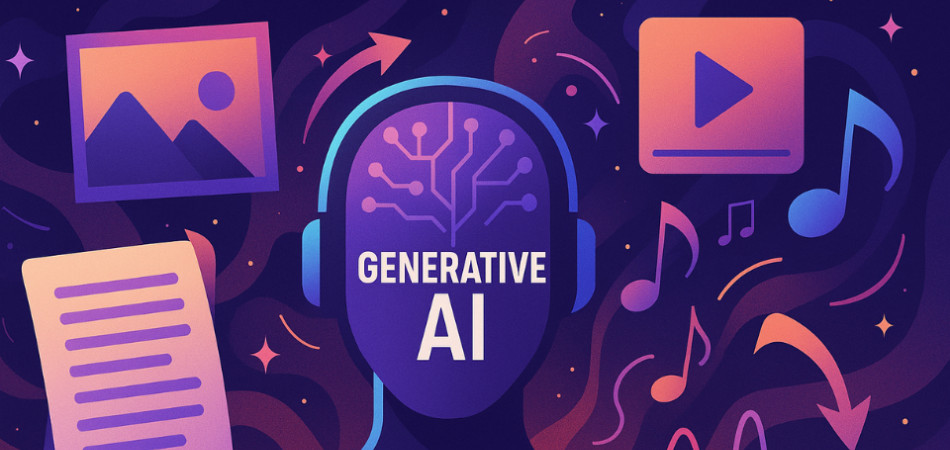
The world of content is experiencing a massive transformation. At the heart of this change is generative artificial intelligence, often called generative AI.
This powerful technology can create content like articles, images, videos, music, and even code. What makes it special is its ability to produce original material that looks and feels like it was made by a human.
Generative AI is not just another tool. It is a game-changer that is reshaping how we create, share, and interact with content.
From bloggers and marketers to designers and developers, everyone is finding new ways to use AI to save time and boost creativity. This article will explore what generative AI is, how it works, its applications, benefits, challenges, and what the future holds.
What Is Generative AI?
Generative AI refers to artificial intelligence systems that can generate new content by learning patterns from large amounts of data.
Unlike traditional AI that is designed to perform tasks like recognizing images or translating text, generative AI focuses on creating new material.
Some well-known tools include:
-
ChatGPT: for writing text
-
DALL E and Midjourney: for creating images
-
Sora: for generating video
-
AIVA: for composing music
These tools can take a short input and produce high-quality content in seconds.
They work by learning from millions of examples and then using that knowledge to generate similar outputs.
The Evolution of Content Creation
Creating content has always required time, skill, and effort. Writers needed to research and edit articles. Designers spent hours creating visuals.
Video editors carefully crafted every second of footage. With the rise of the internet and social media, the demand for content has exploded. People now expect fresh content daily.
This demand created a challenge. How can businesses and creators keep up? Generative AI offers a solution.
It can automate many of the repetitive tasks involved in content creation.
For example, writing product descriptions, creating social media posts, or generating ad images. This means that creators can focus more on ideas and strategy, while AI handles the execution.
Applications of Generative AI in Content Creation
Generative AI is being used in many different areas. Below is a look at some of its most important uses:
| Application Area | Examples | Impact |
|---|---|---|
| Text Generation | Blog posts, scripts, summaries | Faster writing, consistent tone |
| Image Creation | Marketing banners, digital art | Quick design, creative freedom |
| Video Production | Animated videos, dubbing | Saves editing time, multilingual content |
| Music Generation | Background scores, jingles | Original music without musicians |
| Code Generation | Apps, websites | Faster development, fewer bugs |
| Localization | Translations, subtitles | Easy access to global audiences |
Text Generation
AI tools like ChatGPT can write articles, email campaigns, social media captions, and more. These tools are especially useful for marketers and content teams who need to produce a lot of content quickly.
The text can be customized for different audiences and styles, making it easier to maintain a brand voice.
Image and Design Creation
Tools like DALL E and Midjourney allow users to generate stunning visuals using only text prompts. For example, typing "a futuristic city at sunset" can result in a beautiful digital painting.
This makes it easier for non-designers to create eye-catching content.
Video and Audio Production
Generative AI can also produce videos and audio content. Some tools can take a script and create a full video, complete with animation and voiceover. Others can translate and dub videos in different languages. Musicians use AI to compose background scores or experiment with new sounds.
Software Development
Developers are using generative AI to write and test code. Tools like GitHub Copilot can suggest code snippets or even complete programs.
This reduces development time and helps teams catch bugs earlier.
Localization and Repurposing
AI can also help businesses expand their reach by translating content into different languages. Tools like Lokalise AI automate this process and adjust content to suit local cultures and preferences.
This helps brands connect with a global audience without needing large translation teams.
Industries Being Transformed by Generative AI
Generative AI is not limited to a single field. It is making a big difference in many industries:
Media and Journalism
Newsrooms are using AI to write news summaries, generate headlines, and suggest article ideas.
This allows journalists to focus on in-depth reporting while AI handles the basics.
Marketing and Advertising
Marketers use AI to create email campaigns, product descriptions, ad copies, and more.
These tools can also analyze data to predict what kind of content will perform best. This leads to better results with less effort.
Entertainment and Gaming
Game developers use AI to design characters, maps, and storylines. Streaming platforms use it to suggest content based on viewer behavior.
Creators can now make interactive stories that respond to user choices.
Education and E-Learning
AI is helping teachers create custom learning plans. It can also generate quizzes, summaries, and visual aids. This helps students learn better and gives educators more time to focus on teaching.
E-Commerce and Customer Support
Online stores use AI to write product descriptions, suggest items, and answer customer questions.
Chatbots powered by AI can help users find what they need quickly, improving the shopping experience.
Benefits of Generative AI in Content Creation
Generative AI brings many advantages to the table:
Speed and Efficiency
Tasks that used to take hours can now be completed in minutes. This helps businesses meet deadlines and respond to trends more quickly.
Scalability
AI makes it easy to produce large amounts of content. This is useful for businesses that need to publish content regularly across multiple platforms.
Personalization
AI can analyze user data to create personalized content. Whether it is a product suggestion or a newsletter, AI helps deliver the right message to the right person.
Cost Savings
By reducing the need for manual labor, businesses can save money. Small teams can now achieve what once required large departments.
Increased Creativity
AI can suggest ideas, styles, and formats that creators might not think of on their own. This collaboration can lead to more innovative content.
Challenges and Ethical Issues
While generative AI offers many benefits, it also presents some challenges:
Quality Control
AI-generated content is not always accurate. It can sometimes include errors or false information. Human review is important to ensure the final output is reliable.
Originality and Authenticity
As AI becomes better at mimicking human style, it becomes harder to tell if content was made by a person or a machine. This raises questions about copyright and ownership.
Misinformation and Deepfakes
Generative AI can be used to create fake images, videos, and news. Without proper guidelines, these tools can spread harmful content.
Job Displacement
There are concerns that AI could replace human workers. However, many experts believe it will more likely change jobs rather than eliminate them. New roles will emerge that focus on guiding and supervising AI tools.
Future Trends in Generative AI
The future of generative AI is exciting. Here are some trends to watch:
Hyper-Personalization
AI will get better at understanding individual preferences. This means users will see content that feels made just for them.
AI in Virtual and Augmented Reality
Generative AI will play a key role in creating 3D environments, interactive experiences, and real-time content in virtual spaces.
Wider Accessibility
As tools become easier to use, more people will be able to create content. This opens the door for diverse voices and ideas.
Better Collaboration Between Humans and AI
Instead of replacing humans, AI will act as a partner. Humans will set the vision and direction, while AI helps with execution.
Real-World Examples
Here are some real examples of companies using generative AI successfully:
BuzzFeed uses AI to create interactive quizzes that keep users engaged.
Snapchat introduced My AI, a chatbot that offers personalized recommendations and answers.
Canva offers AI tools for editing images, resizing designs, and adding voiceovers.
RAD AI helps marketers craft emotional and effective campaigns using data insights.
Lokalise AI translates and adapts content for global audiences with just a few clicks.
Tips to Use Generative AI in Your Content Strategy
If you want to start using generative AI, here are some simple steps:
-
Use AI for routine tasks like writing product descriptions or creating visuals
-
Personalize content based on user behavior and interests
-
Optimize content for search engines using AI suggestions
-
Always review AI content before publishing
-
Try new tools and formats to stay ahead of trends
Conclusion: Embrace the Change
Generative AI is more than a tool. It is a partner in creativity and productivity. By automating tasks and sparking new ideas, it helps creators and businesses do more with less. The key is to use it wisely, combine it with human insight, and always aim for quality and authenticity.
As we look to the future, those who embrace generative AI will be better equipped to innovate, compete, and connect with their audiences. The age of AI-powered content is here, and it is only the beginning.