Artificial intelligence is no longer a future idea. It is now changing how people get healthcare. It helps doctors find health problems earlier, gives patients the option to meet their doctors from home, and makes treatments more personal to each patient’s needs.
AI is making healthcare faster, safer, and easier for patients and healthcare workers. Many hospitals and clinics use AI every day to improve care.
More people trust AI in healthcare because it helps reduce mistakes and makes treatment faster.
AI is not only helping doctors find diseases quickly but also making it easier for patients to get answers and support.
Medical customer service has also improved with AI chatbots and virtual assistants that help answer questions, book appointments, and give health advice any time of day.
This blog will explain the main ways artificial intelligence is improving healthcare and why it is becoming a big part of modern medicine.
What Does AI in Healthcare Mean?
Artificial Intelligence in healthcare means using computers and smart software to help doctors and nurses do their jobs better.
These programs can look at medical scans, help answer patient questions, and warn about health problems before they happen.
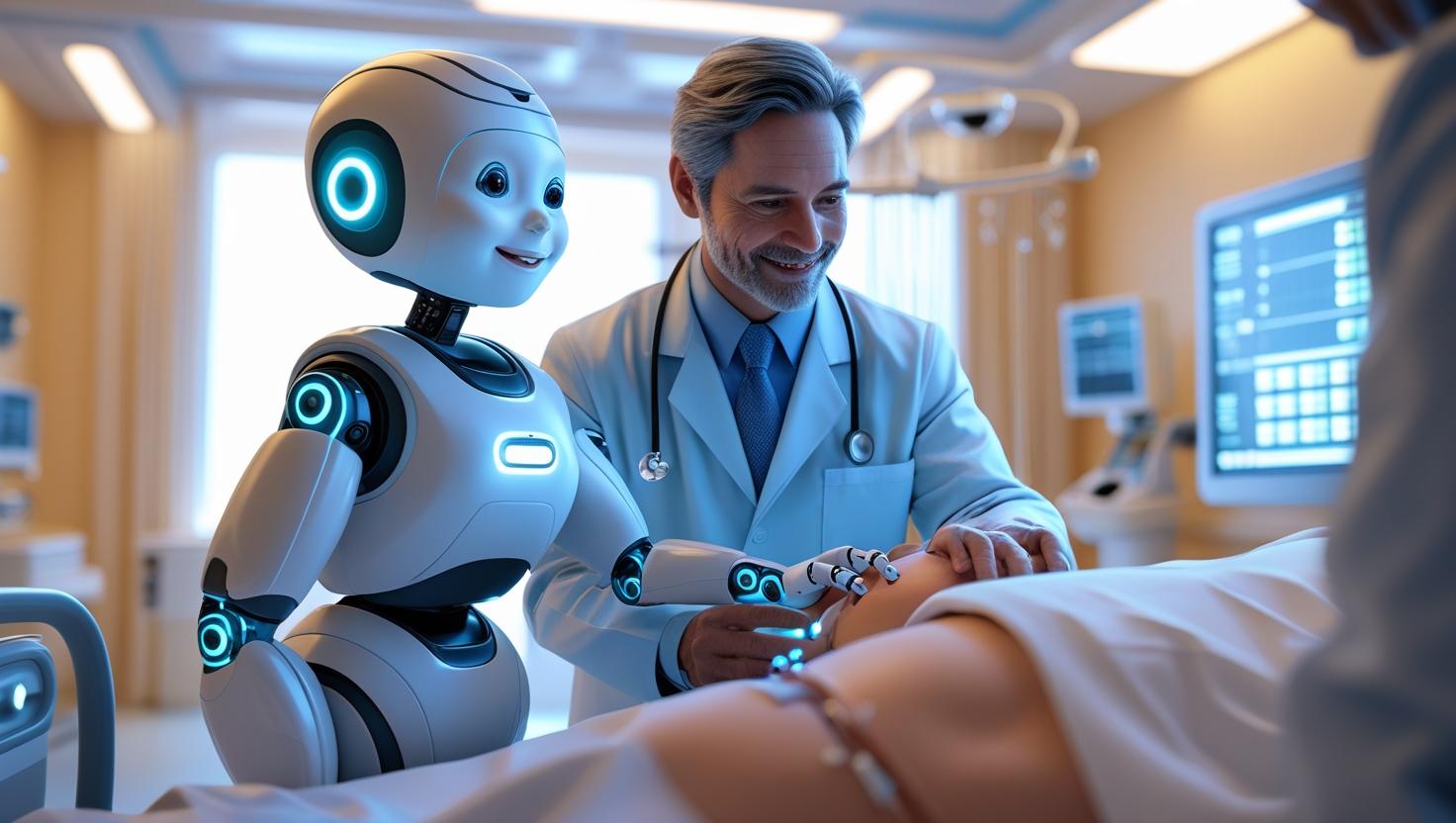
AI is like a helpful assistant that makes sure patients get the right care quickly and safely. It does not replace doctors but helps them work faster and smarter.
Key AI in Healthcare Statistics
| Area of Impact | Statistic | Source/Note |
|---|---|---|
| Accuracy of AI in Imaging | Up to 95% accuracy in detecting diseases | Helps reduce diagnostic errors |
| AI Use in Radiology | Over 70% of providers use AI tools | Shows widespread adoption in diagnostic imaging |
| Speed of Image Analysis | AI analyzes scans 60 times faster than humans | Cuts wait times drastically |
| Reduction in ER Visits | 18% fewer emergency visits with AI triage | Example: Cleveland Clinic chatbot use |
| Cost Savings | Up to $150 billion saved annually in the US | From faster diagnosis and improved operations |
| Medication Adherence | 60% improvement with AI reminders | Helps patients follow treatment plans better |
| Reduction in Hospital Stays | 20-30% fewer hospitalizations due to remote monitoring | Early alerts prevent complications |
| AI Use in Telehealth Visits | 60% of telehealth visits use AI triage | Speeds up patient care remotely |
AI Helps Diagnose Diseases Faster and More Accurately
One of the most important uses of AI in healthcare is diagnosing diseases.
AI can look at X-rays, CT scans, and MRIs and find problems with very high accuracy. This helps doctors avoid mistakes.
For skin diseases like cancer, AI can detect signs as well as expert doctors. AI models can predict serious conditions like heart failure or sepsis before symptoms even appear.
This gives doctors a head start in saving lives.
By helping doctors find problems earlier, AI improves patient outcomes and saves lives.
AI Is Changing Radiology
Radiology is the field that uses scans to look inside the body. AI has changed radiology a lot.
More than seventy percent of doctors in North America now use AI tools to help read medical images.
AI can analyze scans up to sixty times faster than humans. This means patients get results faster. Faster results help reduce wait times, lower costs, and improve care.
Because of AI, hospitals save billions of dollars every year while giving better service.
How AI Makes Hospital Operations Smoother
AI does more than just help find diseases. It also makes hospitals and clinics run better behind the scenes. This means less waiting and better care for patients. Here are some ways AI improves hospital operations:
-
AI chatbots answer many patient questions. They handle about forty percent of simple inquiries. This lets nurses and staff focus on more urgent tasks.
-
AI tools help doctors write reports and fill out paperwork faster. Some systems reduce documentation time by over sixty percent.
-
Telehealth services use AI to triage patients, which means sorting them by how urgent their needs are. This reduces waiting times by about thirty percent.
-
AI systems help schedule appointments and manage hospital resources to avoid delays and crowded waiting rooms.
Real-Life Examples of AI in Healthcare
Many hospitals and companies are already using AI with great success. Here are a few real examples:
-
Cleveland Clinic: They use AI chatbots that answer ten thousand patient questions each month. This reduced emergency room visits by eighteen percent and saved the hospital two million dollars a year.
-
Speedoc in Singapore: This company uses AI to provide virtual home care. Their AI catches warning signs early, helping patients avoid emergency hospital trips.
-
Heidi Health in Australia: This startup uses AI to write clinical notes for doctors. It logs over one million patient interactions each week. This saves doctors a lot of time.
AI Creates Personalized Treatment and Remote Monitoring
AI helps doctors provide treatment that fits each patient’s unique needs. It also allows patients to stay safe while they are at home. Here is how AI makes this possible:
-
AI reminds patients to take their medicine. This helps improve how well treatments work by up to sixty percent.
-
Remote monitoring devices track patient health from home. They send alerts to doctors if something seems wrong. This reduces hospital stays by twenty to thirty percent.
-
Around sixty percent of online doctor visits use AI to help with first checks and triage. This makes virtual care fast and safe.
Some Cool AI Tools Helping Patients Today
There are many smart AI tools designed to make healthcare easier and more convenient for patients. Here are some examples:
-
WoundAIssist: This tool lets patients take pictures of wounds using their smartphones. AI helps doctors track healing without needing a hospital visit.
-
AI tools in India predict heart problems early by spotting hidden patterns. This helps doctors prevent emergencies.
-
AI-powered apps remind patients about medications and follow-up appointments. They also provide health tips based on patient data.
Read More: Top AI Tools in Healthcare
Why Doctors Are Still Important
Even with all the AI help, doctors and nurses are still very important. AI speeds up simple tasks, but it cannot replace the care, empathy, and judgment that humans give.
It is important that AI is used carefully and ethically to keep patient information safe and to avoid mistakes.
Most healthcare companies use AI to support doctors, not to replace them. This way, AI and humans work together to give the best care.
The Benefits and Challenges of AI in Healthcare
AI has many benefits but also some challenges:
-
AI helps doctors diagnose diseases faster and more accurately.
-
It makes hospital work smoother and reduces costs.
-
AI allows more patients to get personalized care and remote monitoring at home.
-
However, AI must be used carefully to protect patient privacy.
-
AI systems need to be tested to avoid bias or errors.
-
Human doctors must always check AI’s work to make sure patients get the best care.
What the Future Holds for AI in Healthcare
AI will keep growing and changing healthcare in many ways. We can expect:
-
More advanced tools to monitor patients at home.
-
Smarter virtual assistants that help patients and doctors anytime.
-
Better personalized treatments based on AI’s data.
-
AI helping with mental health and chronic disease management.
Future Outlook and Return on Investment
The ROI on AI in healthcare is compelling:
-
Health organizations expect 87 percent saw patient improvements after AI adoption .
-
AI-based interventions could save $150 billion annually in the U.S. by 2026 .
-
The global market is projected to hit $45 billion by 2026 and $188 billion by 2030 .
Conclusion
AI in healthcare is not replacing human providers but is changing how care is given, recorded, and personalized.
From diagnosing illnesses to virtual doctor visits, AI helps improve results, save money, and make care more efficient.
As AI becomes more common, it is important to use it in a way that supports human empathy and judgment instead of replacing them.