AI in learning is not just a trend; it’s shifting our way to learn. These neat tools make learning more for you, simpler, and for all.
With AI, teachers can tune classes to each kid, making sure all learn at their pace and style. No one falls behind!
In the future, AI will bring even cooler things to schools, like finding out what kids find hard early and having help online anytime.
As schools switch up with times, using AI is more than a smart move, it’s needed to keep up with what kids need now.
By 2025, AI in healthcare has moved from fresh to a main game player in doctors’ work. AI tools are now key in finding sickness better, making care fit each person, and running hospitals smoothly.
These advanced tools are overhauling how doctors spot issues, manage patient data, and deliver care that’s on time and effective.
With healthcare growing complex, AI tools are lifting some burden from doctors, nurses, and crew.
By automating stuff like paperwork, making schedules smooth, and watching patients closely, these tools boost work done and let medical folk focus more on patients.
At the same time, patients are spotted quicker, treated better, and feel healthier overall.
As healthcare evolves, AI tools will play even bigger roles, solving long, standing issues.
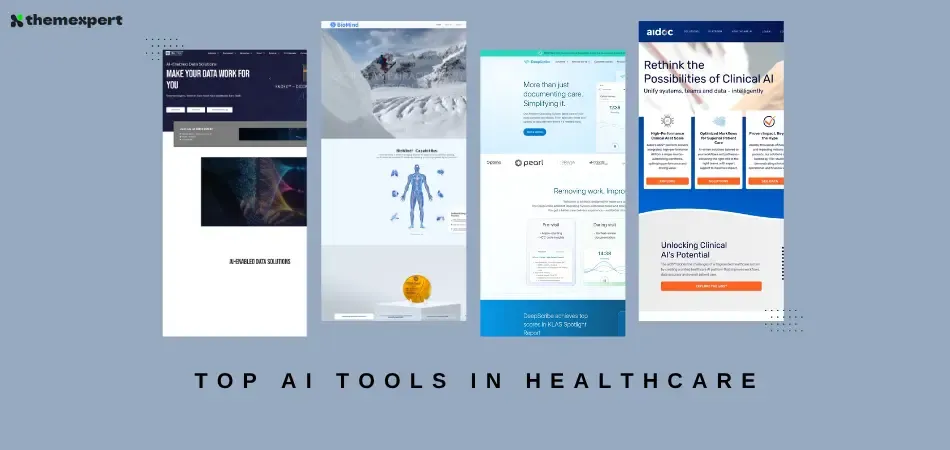
This article reviews top AI tools in healthcare in 2025, showing their functions, why they rock, and how they aid both medical staff and patients.
Why AI tools should be used in Healthcare
AI in healthcare is not just a tech step, up; it’s a key move for smart, quick, and fair health care.
As this tech grows, it will be a core piece of how we treat people.
1. Better Correctness in Finding Illness
AI can look through huge piles of health data, like scans, test results, and past health records, quicker and with more rightness than people. This aids doctors in finding things like cancer, heart issues, and brain issues sooner, which betters chances and saves lives.
2. Made, for, you Healing Plans
AI helps make medicine personal by making care plans for each person’s needs. By checking genes, how people live, and past health, AI can push treatments that are more likely to work well, cutting down on guesswork.
3. Less Work Stress
Hospitals and clinics have a lot of paperwork. AI in health can do jobs like setting times to meet, billing, and record, keeping, which cuts much stress for health workers and makes things run better.
4. Quick Choices
In urgent care, quick action is key. AI gives fast insights and help in making choices, aiding health pros in acting fast and with good info during hard times or when care is most needed.
5. Less Cost
By making things work smoother and cutting mistakes, AI in health lowers prices. It helps skip needless steps, cuts the times people are readmitted to the hospital, and uses health tools better.
6. Better Care Involvement
AI talking bots, helpers, and distant check, up tools make patient care better and keep them on track. People get timely reminders, tips just for them, and help any time, all of which helps them stick to plans and get better results.
7. Help That Can Grow
AI allows for more health care to be brought to places with too few doctors or far, off spots. With telehealth and AI tests, good care can reach more people, even those far from health pros.
8. Knowing Risks Beforehand and Stopping Illness
AI can find patients at risk by seeing patterns in health records. This lets care givers act sooner, stop illness from getting worse, and cut health care costs over time.
Top AI Tools in Healthcare for 2025
1. C2-Ai
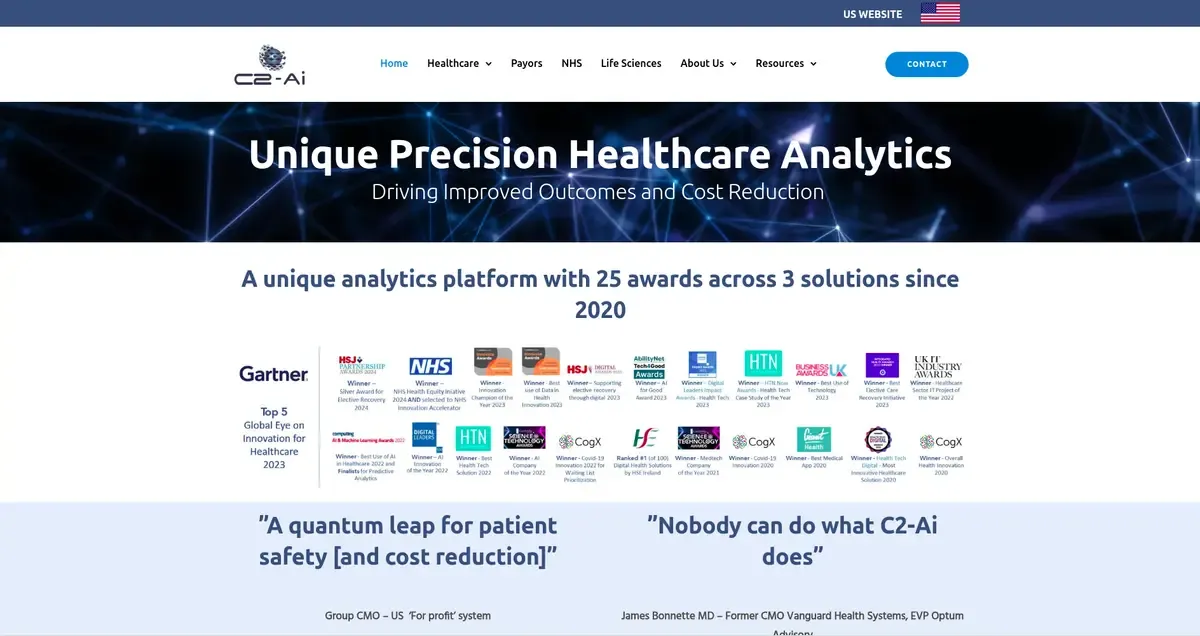
C2, Ai (Comparing Complications, Artificial Intelligence) is a top health tech firm that gives high, tech AI tools built to know surgery risks and likely patient issues with high true hit rates.
By using big data sets and health, care know, how, C2, Ai helps health workers take early steps, make patient safety better, and gets good care choices set before problems show up.
As one of the top AI tools in health care, C2, Ai is known for its skill to check each patient’s risk before surgery.
Key Features:
-
Predictive analytics for surgical outcomes
-
Patient risk stratification
-
Integration with electronic health records (EHRs)
Pros and Cons:
| Pros | Cons |
|---|---|
| Enhances patient safety | Requires high-quality data input |
| Reduces postoperative complications | Integration complexity |
| Supports clinical decision-making | May need staff training |
Starting Price: Custom pricing based on institutional needs
2. Enlitic Curie™
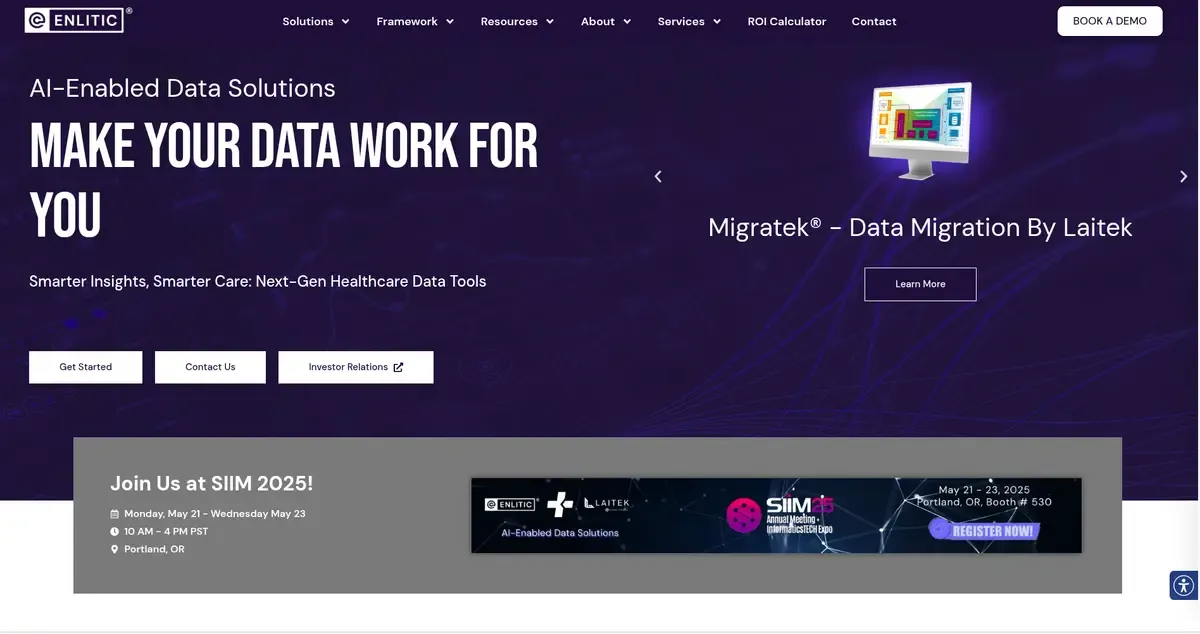
Enlitic Curie™ is an AI platform that’s changing radiology. It helps make diagnoses better and faster.
It uses deep learning and cool data tricks to help radiologists read medical images with more skill.
This platform spots stuff that might be hard to see, so doctors can figure out what’s going on faster and help folks feel better.
It’s one of the smartest AI helpers in healthcare right now.
Key Features:
-
AI-powered image analysis
-
Prioritization of critical cases
-
Continuous learning algorithms
Pros and Cons:
| Pros | Cons |
|---|---|
| Accelerates diagnosis | Dependent on image quality |
| Reduces radiologist workload | Requires integration with PACS |
| Improves patient outcomes | Subscription-based pricing |
Starting Price: Custom pricing based on usage and features
3. DeepScribe
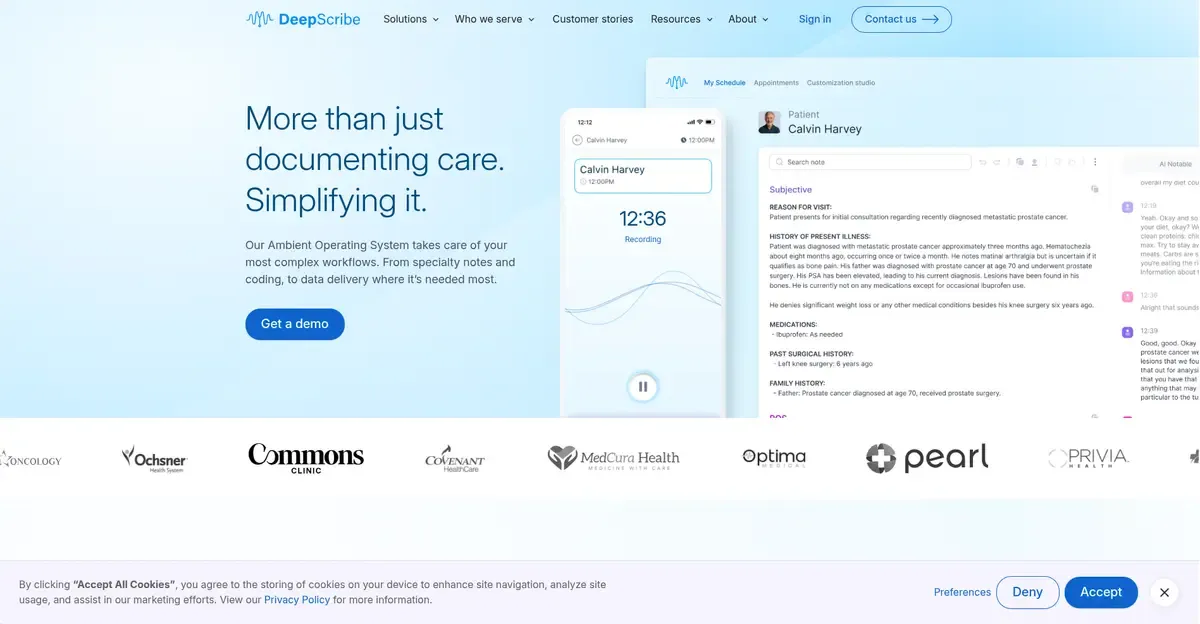
DeepScribe is a cool platform that uses AI to help with medical transcriptions, changing how clinical documents are handled in healthcare these days.
It uses fancy tech like natural language processing and machine learning to listen in on chats between patients and doctors. Then, it automatically makes clinical notes that are spot-on and structured.
This gets rid of manual charting and lightens the load for healthcare staff.
DeepScribe is one of the most helpful AI tools out there. It lets doctors spend more time with patients and less time on paperwork.
Key Features:
-
Real-time transcription
-
EHR integration
-
Natural language processing
Pros and Cons:
| Pros | Cons |
|---|---|
| Saves time on documentation | May require proofreading |
| Enhances patient interaction | Accuracy varies with accents |
| Reduces administrative burden | Subscription cost |
Starting Price: Subscription plans starting at $99/month
4. BioMind

BioMind is a top maker of AI tools that help spot and manage brain sickness early.
By using deep learning and medical picture look, up, BioMind helps doctors find hard health issues like stroke, brain growths, and other brain problems faster and with more right hits.
The setup reads medical photos, like MRIs and CT scans, with the skill of an expert, cutting down the chance of mistakes by people in big clinics.
As one of the best AI tools in health care, BioMind is changing the way we find and fix brain sickness.
Key Features:
-
Brain imaging analysis
-
Predictive modeling
-
Decision support systems
Pros and Cons:
| Pros | Cons |
|---|---|
| Early detection of disorders | Limited to neurological cases |
| Supports treatment planning | Requires specialized equipment |
| Enhances diagnostic confidence | Training required for use |
Starting Price: Custom pricing based on deployment scale
5. Aidoc
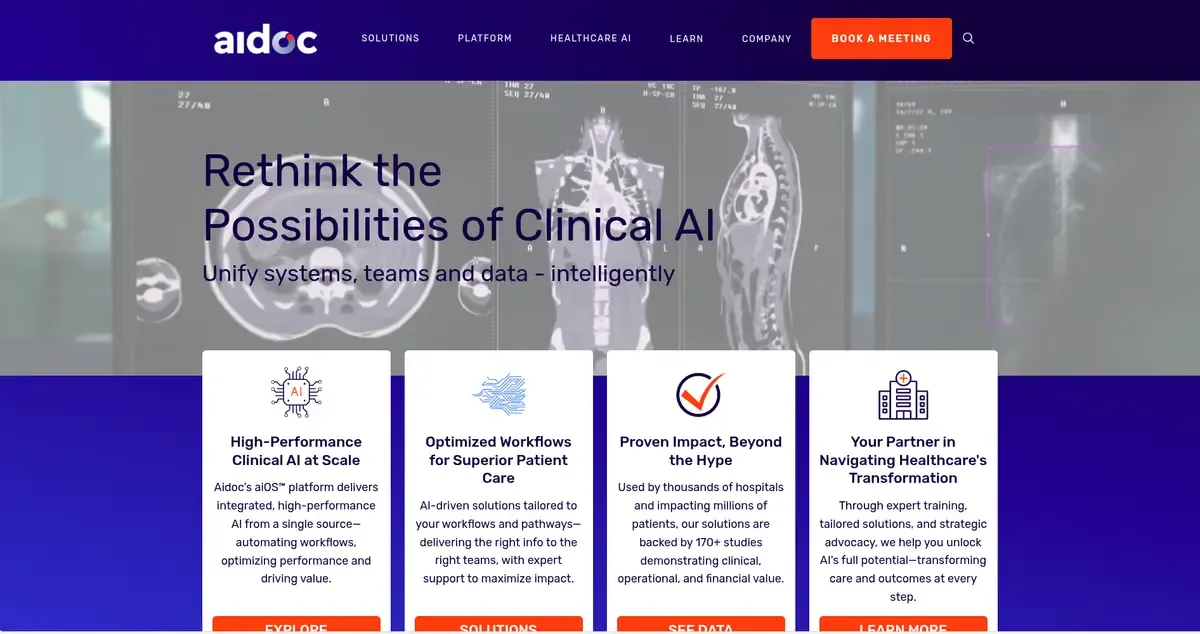
Aidoc is known all over the world as a top name in AI help for reading medical images, made to make it faster and more right.
By using high, tech deep learning methods, Aidoc looks at CT scans and other image info right away to find big issues, like brain bleeds, lung clots, and back breaks, letting doctors and quick help teams put these urgent cases first and act fast.
As one of the key AI tools in health care, Aidoc is big in making clinic work smooth and getting better at finding what’s wrong with people.
Key Features:
-
Automated image analysis
-
Workflow integration
-
Continuous algorithm updates
Pros and Cons:
| Pros | Cons |
|---|---|
| Rapid identification of issues | Dependent on imaging modalities |
| Improves radiologist efficiency | Subscription-based model |
| Enhances patient care | Integration complexity |
Starting Price: Custom pricing based on institutional requirements
Comparison Table of AI Healthcare Tools
| Tool Name | Main Feature | Suitable Area | Free Version Available |
|---|---|---|---|
| C2-Ai | Surgical Risk Prediction | Hospitals, Surgical Centers | No |
| Enlitic Curie™ | Radiology Workflow Optimization | Radiology Departments | No |
| DeepScribe | Medical Transcription Automation | Clinics, Hospitals | No |
| BioMind | Neurological Diagnosis Support | Neurology Departments | No |
| Aidoc | Imaging Abnormality Detection | Radiology Departments | No |
Why You Should Consider These Tools
Using AI tools in health care gives many good points:
- Better Finding Disease: AI can spot things and issues that people might miss, which means we can know about sicknesses sooner and more correctly.
- Work Better: AI takes care of usual jobs so health workers can give more time to looking after patients, which cuts down tiredness and makes them happier at work.
- Custom Care: AI looks at a lot of patient info to make care plans that fit each person better, which helps them get well.
- Save Money: AI makes work flow smooth and cuts mistakes, which saves a lot of money for health places.
Conclusion
The use of AI tools in health care is now a real thing, not just a future idea. It’s changing the way doctors work.
These tools make diagnoses more exact, adjust care to each person, and make things run smoother.
As we move into 2025, taking up AI in health care is key for places that want to give top, quick, and focused care. Putting money into these tools makes patient care better and puts health care workers ahead in new medical changes.
Want to Learn More About AI Tools? Check These Out
Top 10 AI Video Generators You Need to Try in 2025
Top 12 AI Landing Page Builders for High-Converting Websites
Unlocking Success: The 15 Must-Have AI Marketing Tools for 2025
10 Stunning Framer Templates for Innovative AI Startups
Top AI Tools for Business Automation in 2025: Streamlining Operations for Maximum Efficiency
Top AI Productivity Tools in 2025: Supercharge Your Workflow