
Eighty-five percent of customer interactions are handled by chatbots, and these ten can revolutionize your online business.
For online retailers, the cost of customer service keeps going up. The e-commerce tickets handled by human agents are between $6 and $12 in resolution cost, and industry averages are $15 per ticket, inclusive of overhead.
These costs multiply rapidly when the stores are dealing with hundreds or thousands of support requests each month. AI chatbot ecommerce solutions address this challenge by automating routine queries while maintaining service quality.
The transition from rule-based bots to Large Language Model agents represents the defining shift in customer service AI for 2026.
Modern WooCommerce chatbot platforms now resolve up to 80% of routine inquiries without human intervention, reducing per-interaction costs to under $1.
Beyond cost savings, AI-powered chat interfaces deliver measurable business impact, with stores implementing proactive chat seeing conversion rate increases of up to 35% by addressing pre-sales friction in real time.
This review presents 10 AI chatbot ecommerce apps according to WooCommerce integration, automation features, pricing system, and demonstrated ROI indicators.
Every solution covers the needs of particular merchants, including low-cost startups and larger brand enterprises that fulfill thousands of support tickets each day.
ThriveDesk
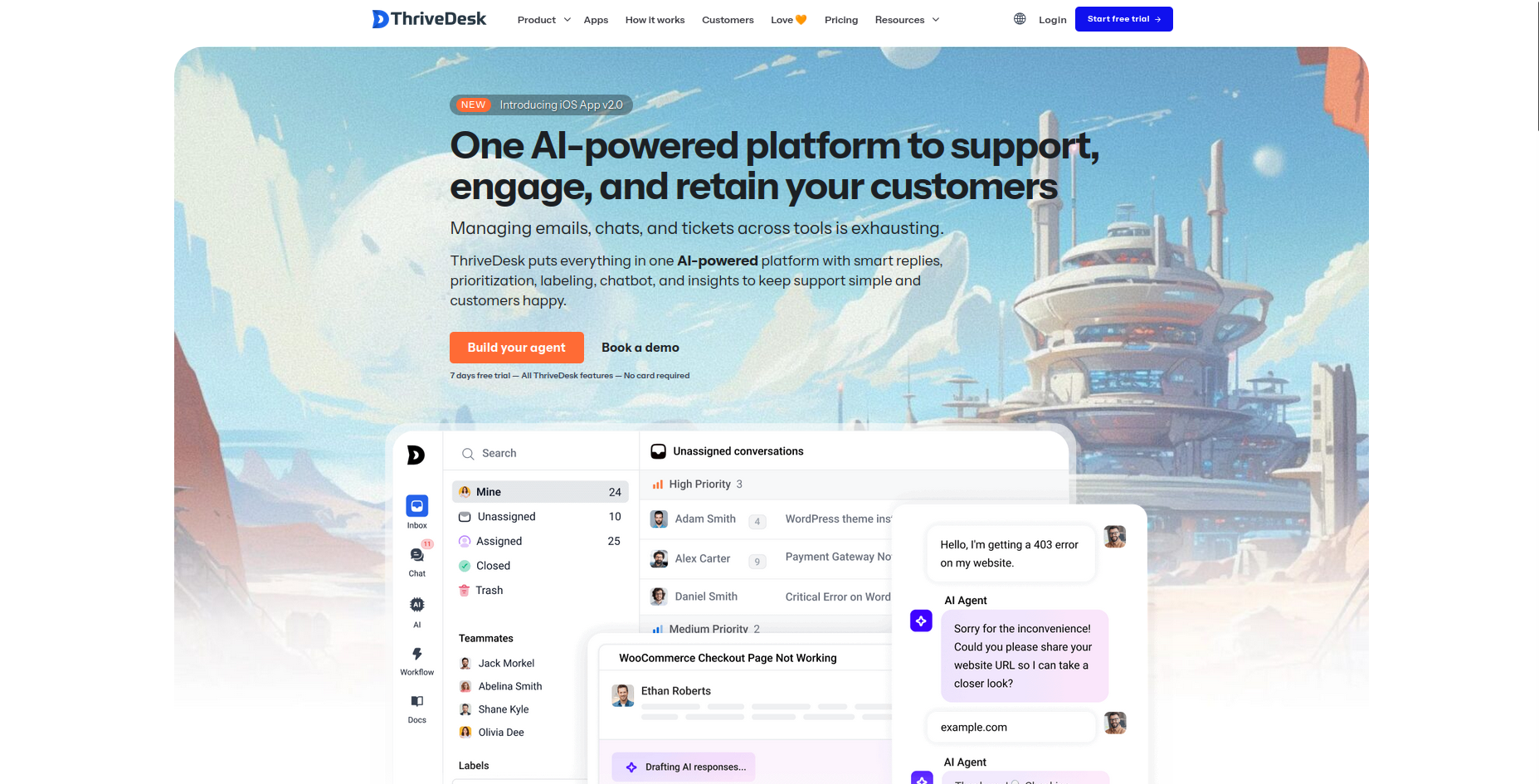
Platform: SaaS with a dedicated WooCommerce plugin
Specialization: Omnichannel customer support with live chat, ticketing, and AI-assisted automation
WooCommerce integration method: The Native WordPress/WooCommerce plugin provides seamless integration.
It pulls order data, customer details, and product info directly from your store, enabling agents to view carts, track shipments, and resolve issues without switching tabs.
AI capability level: AI-powered chatbots and auto-responses using rule-based automation with basic NLP.
Customizable triggers handle FAQs, order lookups, and ticket routing, with options for third-party AI enhancements.
Response accuracy and customer satisfaction impact: Strong accuracy for predefined scenarios via store-specific rules and data syncing.
Boosts satisfaction with quick self-service and reduced wait times, though complex queries often need human input.
Response time and availability: Near-instant automated replies 24/7, with live agent response times averaging 1-2 minutes during business hours.
Multilingual support: Supports multiple languages through plugin translations and agent team setups; no native LLM-based translation.
Pricing model: Free trial. Paid plans start at $29 per agent/month (Basic), scaling to $129/month (Unlimited) with advanced features.
Pros:
- Intuitive dashboard for managing chats across channels
- Deep WooCommerce data access without custom coding
- Generous free tier for testing with unlimited chats
Cons:
- AI is rules-based, less conversational than full LLM agents
- Higher tiers needed for teams or advanced reporting
Best for: Great for WooCommerce stores wanting affordable, reliable omnichannel support with solid plugin integration.
Ideal for small teams handling moderate volumes who value live chat and ticketing over advanced AI conversations.
Tidio (Lyro AI)
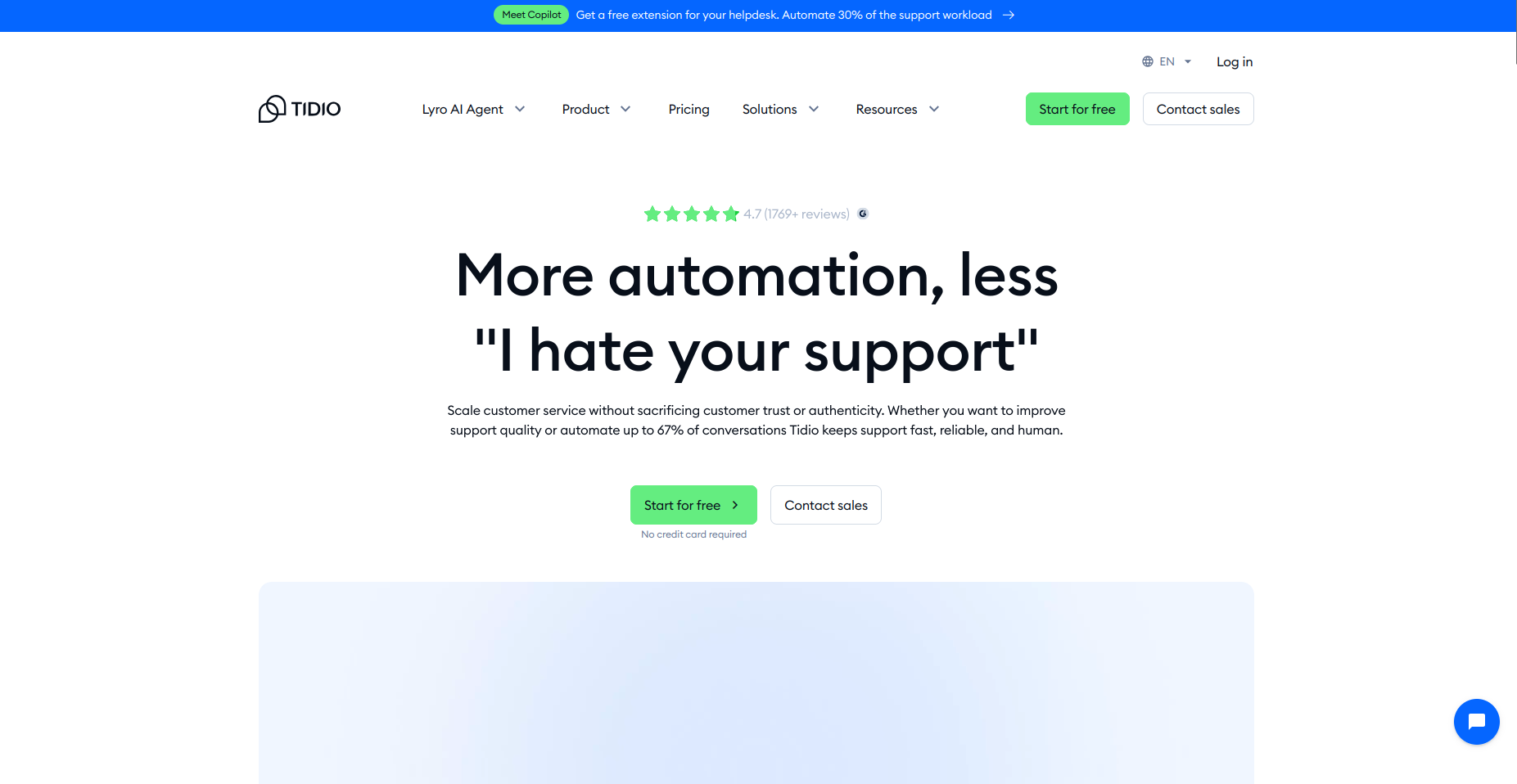
Platform: SaaS with dedicated WordPress and WooCommerce plugin
Specialization: Sales-driven customer support automation powered by the Lyro conversational AI agent
WooCommerce integration method
Native plugin architecture enables deep integration without middleware. The bot accesses order status, displays product cards directly from your catalog, and tracks user carts in real time.
AI capability level
LLM-powered conversational AI. Lyro uses a large language model trained on store-specific help content with guardrails to prevent unsupported answers.
Response accuracy and customer satisfaction impact
High accuracy achieved through confidence scoring. The system only provides answers when confident in data accuracy. When Lyro cannot answer definitively, it escalates to human agents rather than providing uncertain information.
Response time and availability
24/7 automated responses with real-time human escalation.
Multilingual support
Multi-language capabilities through LLM training.
Pricing model
Free plan available. Paid plans start at approximately $29 per month.
Pros:
- Product cards displayed directly from WooCommerce catalog
- Setup completes in under 15 minutes
- Free tier supports small operations without upfront investment
Cons:
- AI usage limits increase costs at higher volumes
Best for
Overall best choice for WooCommerce stores seeking balance between powerful AI capabilities and ease of implementation.
Ideal for small to mid-sized stores prioritizing sales automation alongside support.
WoowBot
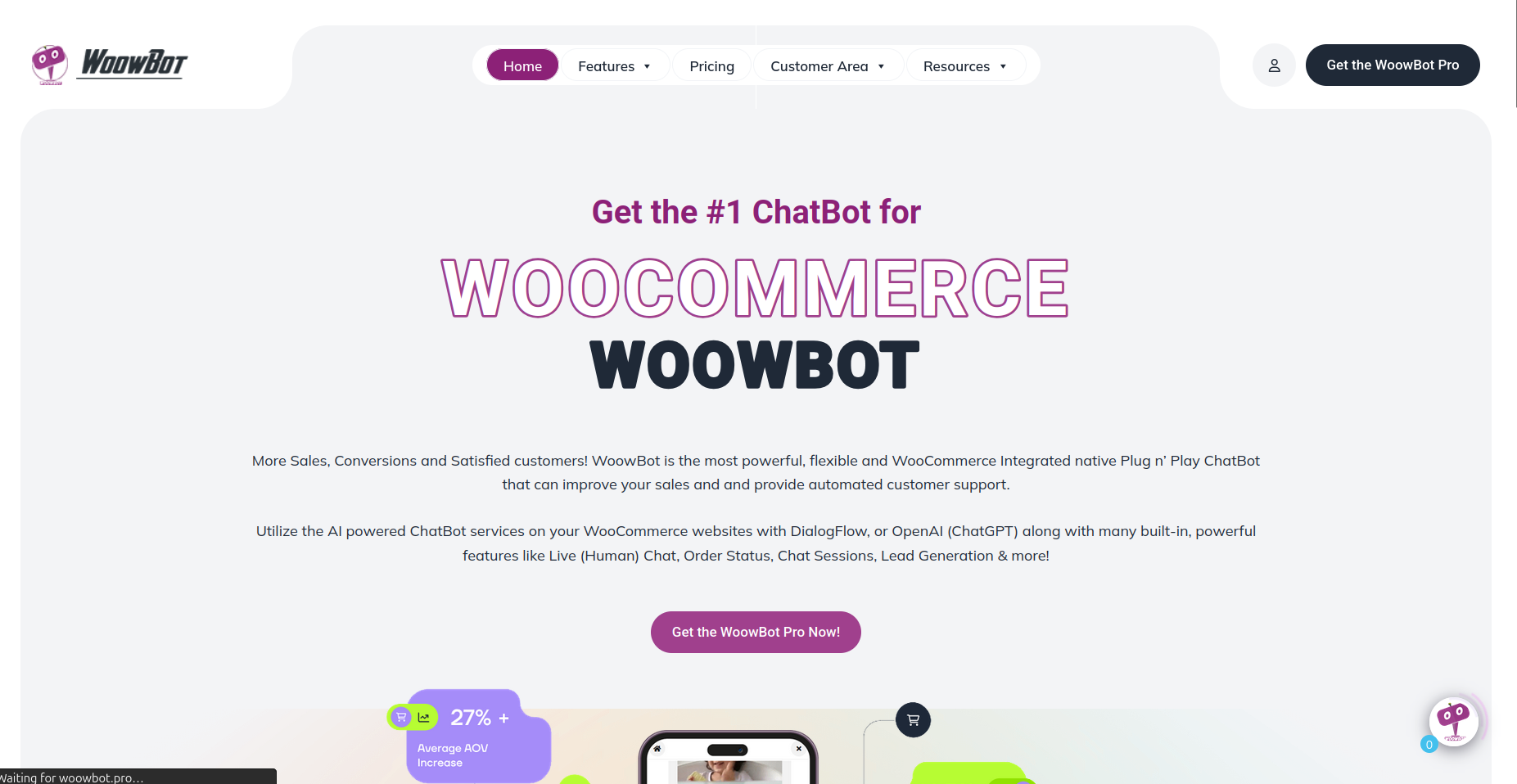
Platform: Standalone WordPress plugin (self-hosted)
Specialization: Dedicated WooCommerce shopping assistant
WooCommerce integration method
Native plugin running fully inside the WordPress environment with direct access to product and cart data. No external SaaS dependencies required.
AI capability level
Hybrid architecture connecting to OpenAI (GPT-3.5/4) or Google DialogFlow via external APIs configured by the merchant. Training occurs directly on product data from your catalog.
Response accuracy and customer satisfaction impact
Accuracy depends on product data quality and AI model configuration. Performs reliably for catalog-driven queries when properly configured.
Response time and availability
24/7 automation once configured.
Multilingual support
Determined by connected AI service (OpenAI or DialogFlow capabilities).
Pricing model
Annual or lifetime license with no monthly subscription.
Pros:
- Customers can add products to cart directly in chat interface
- No recurring SaaS subscription
- Data remains on your server
- One-time payment provides cost predictability
Cons:
- Interface less modern than SaaS alternatives
- Requires manual AI API configuration and separate OpenAI billing
Best for
WooCommerce-native solution for merchants preferring ownership over rental models. Optimal for technically capable stores wanting data control and predictable costs without monthly SaaS fees.
Gorgias
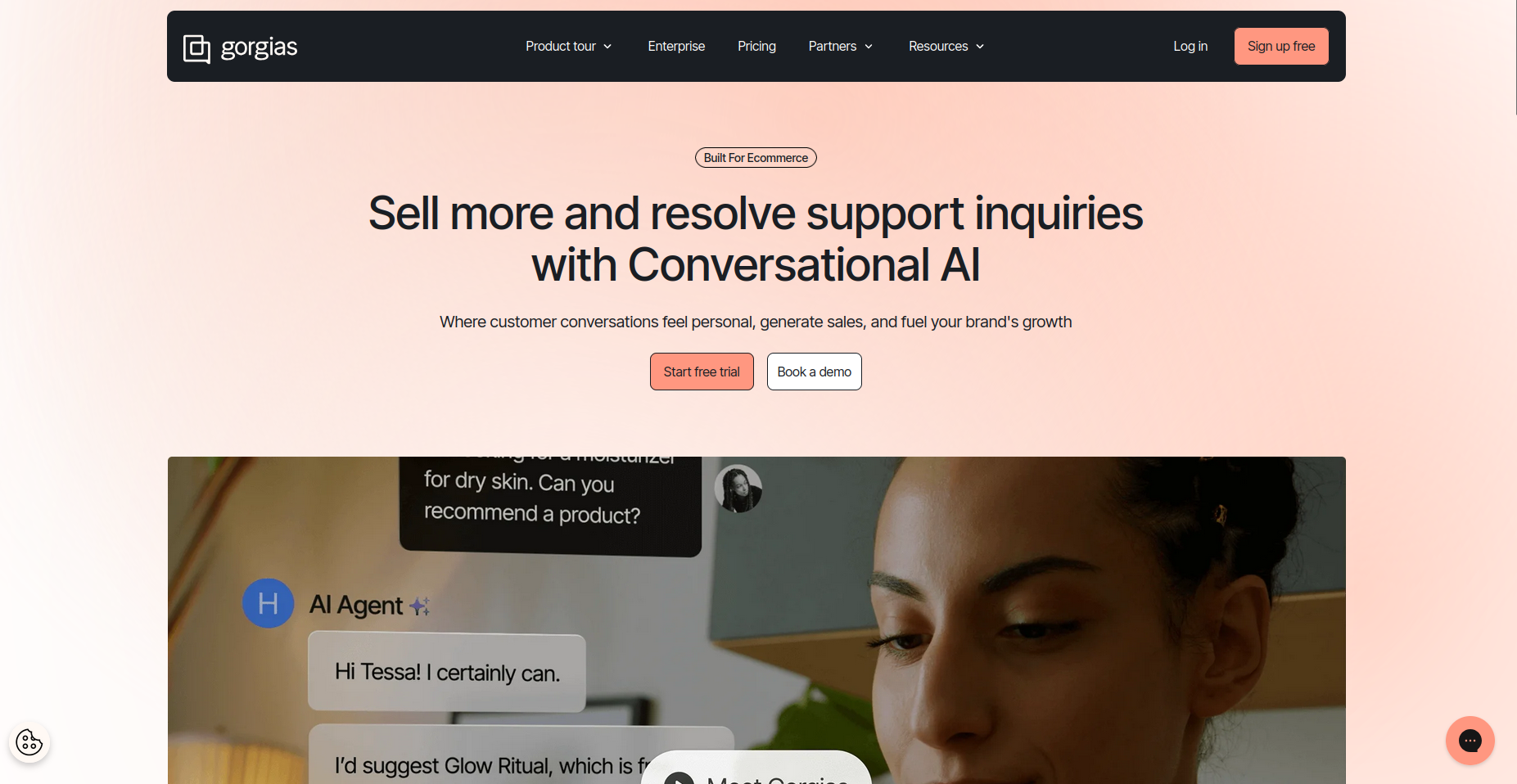
Platform: SaaS e-commerce helpdesk
Specialization: Centralized high-volume ticket management across all support channels
WooCommerce integration method
Connector-based integration that syncs order and customer data for agent visibility. WooCommerce integration operates primarily in read-only mode for basic setups, with advanced actions like refunds requiring API customization.
AI capability level
AI agent capable of autonomous ticket resolution, particularly for WISMO (Where Is My Order) queries and other repetitive support issues.
Response accuracy and customer satisfaction impact
High accuracy for routine queries when properly configured. Autonomous resolution reduces agent workload significantly for common ticket types.
Response time and availability
24/7 AI-powered responses with intelligent routing to human agents.
Multilingual support
Multi-language support across major channels.
Pricing model
Ticket-volume-based pricing. Entry plans start at approximately $10 per month.
Pros:
- Centralizes email, chat, and social media into unified inbox
- Strong automation for order-related queries
- Exceptional for brands processing 500+ monthly tickets
Cons:
- Costs increase rapidly with ticket volume
- WooCommerce integration less robust than native alternatives
- Limited order editing capabilities
Best for
High-volume brands handling 500 or more tickets per month. Best suited for stores with existing multi-channel and social commerce strategies requiring centralized management.
Re:amaze
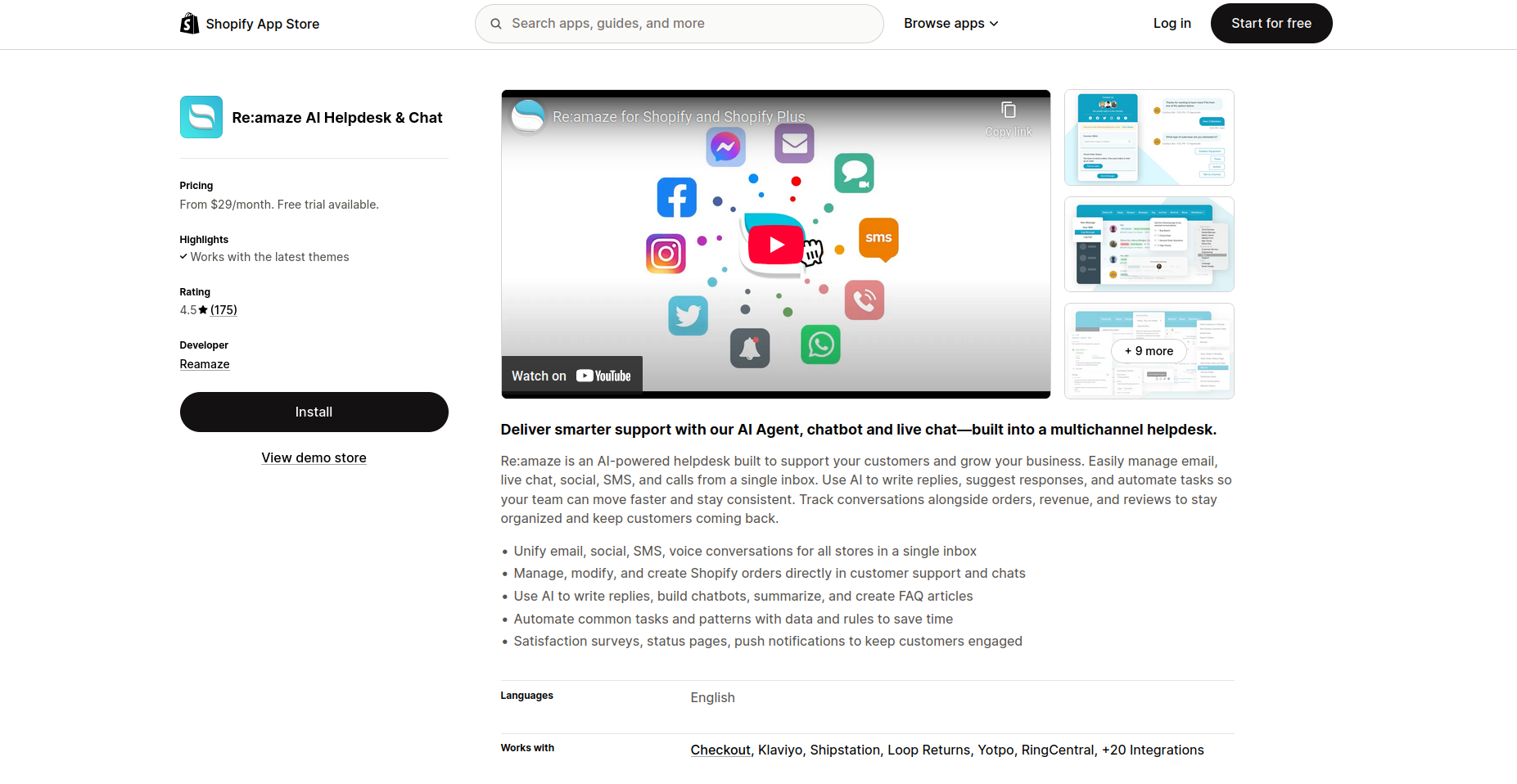
Platform: SaaS helpdesk and live chat
Specialization: Multi-channel support with deep WooCommerce visibility and operational control
WooCommerce integration method
Native plugin providing superior WooCommerce functionality compared to connector-based alternatives. Agents can view and modify orders directly, including creating refunds, updating order status, and viewing customer lifetime value.
AI capability level
Natural Language Processing with intent detection and proactive messaging triggers. "Intents" identify customer needs while "Cues" trigger proactive messages based on browsing behavior.
Response accuracy and customer satisfaction impact
High accuracy for defined intents and proactive assistance scenarios. Proactive messaging drives engagement by addressing customer needs before explicitly asked.
Response time and availability
24/7 proactive bot engagement with seamless human handoff.
Multilingual support
Multi-language capabilities across supported channels.
Pricing model
Per-user pricing. Plans start at approximately $29 per user per month.
Pros:
- Ability to edit orders and issue refunds inside the dashboard
- Live customer browsing view provides real-time behavioral insights
- Predictable per-user pricing prevents unexpected cost escalation
Cons:
- Per-user model can become expensive for large support teams
Best for
Growing WooCommerce stores requiring deep native integration with order management capabilities. Ideal for merchants valuing operational control and real-time customer behavior visibility.
Zendesk AI
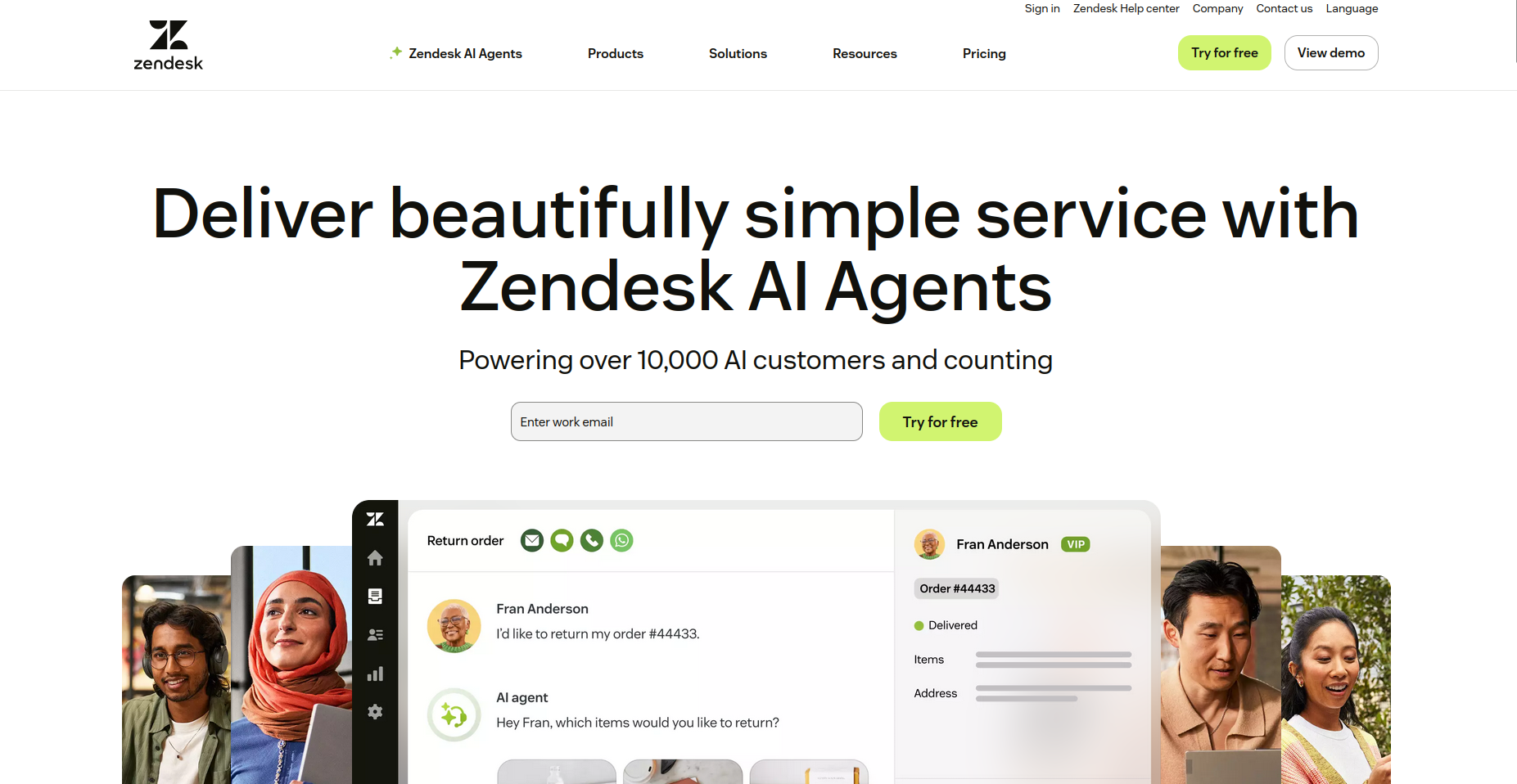
Platform: Enterprise customer service suite
Specialization: Complex workflows and large-scale support operations with maximum reliability
WooCommerce integration method
Connector integration providing order and customer data within agent views. Official plugin enables agents to view customer data and order history alongside tickets.
AI capability level
Advanced AI including intent detection, sentiment analysis, automated article suggestions, and Answer Bot capabilities. Extensive training data enables sophisticated automation.
Response accuracy and customer satisfaction impact
Consistent accuracy at scale with proper configuration and training. Sentiment analysis helps prioritize urgent or frustrated customers.
Response time and availability
24/7 automation with structured agent oversight and enterprise-grade uptime guarantees.
Multilingual support
Extensive language support suitable for global operations.
Pricing model
Per-agent licensing. Core plans start at approximately $19 per agent per month. AI add-ons priced separately.
Pros:
- Strong reporting and workflow tailoring
- Experienced performance in the enterprise level Industry-best integration ecosystem
- Well-respected compliance and security attributes.
Cons:
- Complex to implement and needs a technical resource or consultant
- Costly to low sized teams and over-engineered to middle sized operations.
Best for
Enterprise-level WooCommerce businesses with support teams exceeding 15 agents and ticket volumes justifying enterprise investment.
Freshchat (Freddy AI)
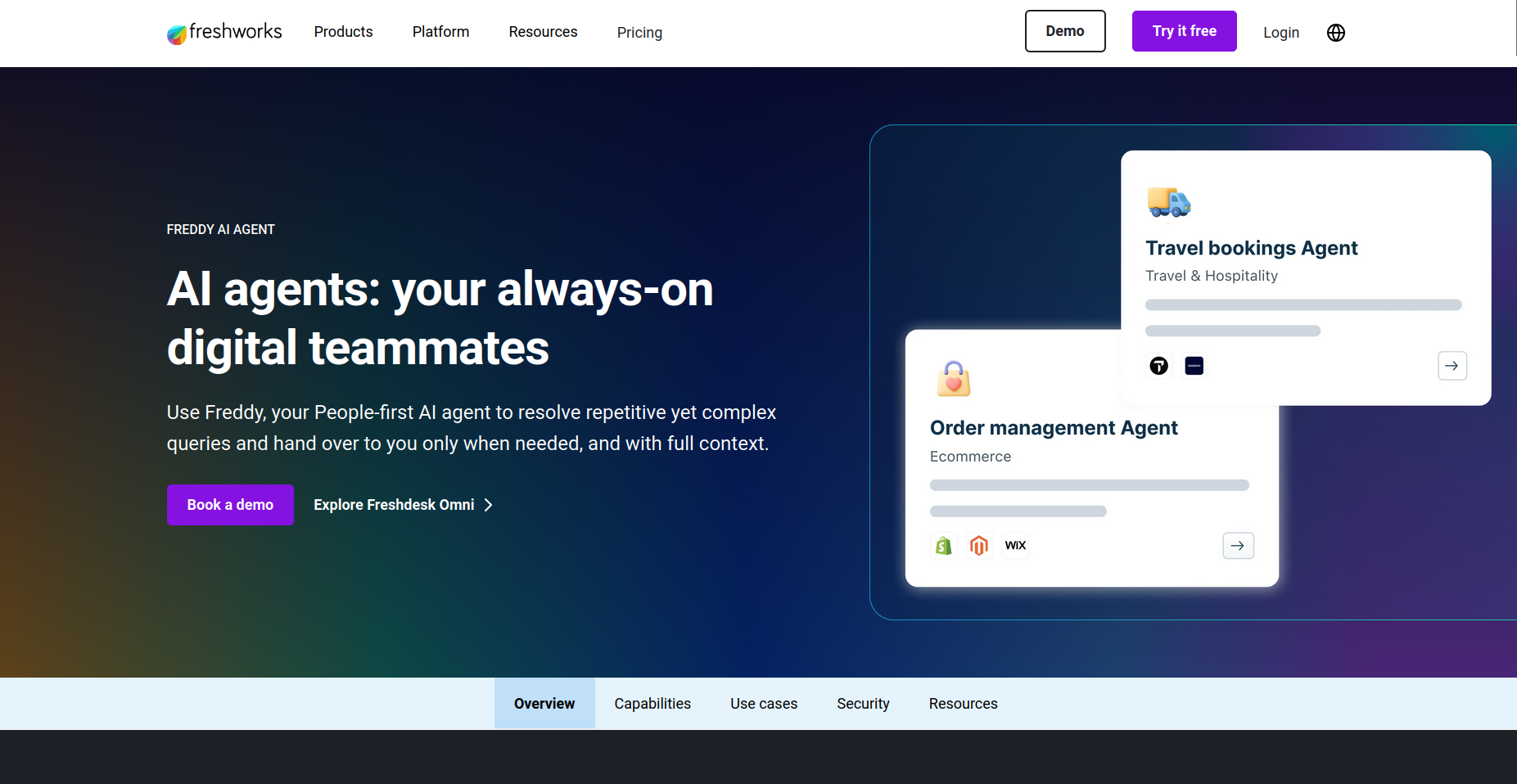
Platform: Customer messaging software within Freshworks ecosystem
Specialization: Omnichannel conversational support with unified messaging
WooCommerce integration method
Connector syncing customer profiles, order history, and data to agent view interface.
AI capability level
Generative AI copilot through Freddy focused on assisting human agents. Summarizes ticket threads, drafts agent responses, and rephrases text for tone optimization rather than full autonomous resolution.
Response accuracy and customer satisfaction impact
Improves agent efficiency and consistency through intelligent assistance. Strong accuracy in summarization and draft generation reduces agent response time.
Response time and availability
24/7 automation and agent-escalated always-on messaging.
Multilingual support
Multi-language support across all messaging channels.
Pricing model
Free plan available. Paid plans start at approximately $23 per agent per month.
Pros:
- Strong WhatsApp and Instagram support
- User-friendly unified inbox
- Strong conversational marketing features
- Low learning curve
Cons:
- Limited autonomous resolution for WooCommerce tasks
- AI features locked behind Pro tier pricing
- WooCommerce integration is less deep than native alternatives
Best for
The mid-market outlets boast of conversational marketing and omnichannel customer interaction. Best suited to the merchants that actively use WhatsApp or Instagram to communicate with their customers.
Smartsupp
Platform: SaaS live chat platform popular in European markets
Specialization: Conversational shopping assistance with session recording capabilities
WooCommerce integration method
Native WooCommerce plugin with plug-and-play setup.
AI capability level
Basic conversational AI for FAQs and product guidance.
Response accuracy and customer satisfaction impact
Adequate for simple queries and browsing assistance. Impact enhanced through session recordings identifying conversion barriers and user confusion points.
Response time and availability
Instant responses with continuous bot availability and 24/7 automation.
Multilingual support
Strong European language coverage with GDPR compliance.
Pricing model
Flat-fee pricing. Paid plans start at approximately $19 per month.
Pros:
- Session video recordings for behavior analysis provide valuable conversion rate optimization insights
- GDPR-friendly setup addresses European privacy requirements
- Affordable for small to mid-sized budgets
Cons:
- Limited AI depth for complex queries
- AI sophistication is lower than LLM-powered competitors
Best for
Small to mid-sized European-oriented stores that need GDPR compliant, low-cost solutions. Especially useful when merchants are focused on conversion optimization knowledge with the help of session analysis.
Help Scout
Platform: Customer support platform emphasizing personal touch
Specialization: Personal, email-centric support avoiding impersonal ticket number systems
WooCommerce integration method
Native plugin displaying order history, customer lifetime value, and complete purchase data in sidebar of every email and chat interaction.
AI capability level
AI assist focused on drafting replies, thread summarization, and agent support rather than autonomous customer-facing responses.
Response accuracy and customer satisfaction impact
Enhances consistency and speed of human responses. Impact measured through improved agent efficiency rather than query deflection.
Response time and availability
Partial 24/7 automation (AI assists agents rather than fully replacing them).
Multilingual support
Available through workflows.
Pricing model
Per-user pricing. Plans start at approximately $25 per user per month.
Pros:
- Human tone without ticket numbers builds brand loyalty
- Strong customer context through integrated LTV and order history
- Clean interface with minimal learning curve
Cons:
- Limited chatbot automation
- Less aggressive sales automation compared to alternatives
- Not optimized for high-volume ticket processing
Best for
Premium brands prioritize customer relationships over automation. Ideal for stores where support interactions represent brand differentiation opportunities rather than cost centers.
Botsify
Platform: SaaS chatbot platform with white-label capabilities
Specialization: AI chatbots for eCommerce automation and omnichannel customer support
Botsify is an AI chatbot platform that allows eCommerce businesses and agencies to build automated chatbots for websites and messaging channels such as WhatsApp, Instagram, and Facebook Messenger.
The platform supports conversational automation for common eCommerce use cases, including order inquiries, product questions, lead capture, and customer support.
A key advantage of Botsify is its white-label chatbot platform, enabling agencies and SaaS providers to deploy and resell chatbot solutions under their own brand.
Chatbots can be trained on store FAQs, help center articles, and product information to provide accurate responses and 24/7 automated support.
Best for: eCommerce businesses and agencies looking for a customizable chatbot platform with white-label deployment options.
ROI Calculator Section
Evaluating ROI for an AI chatbot ecommerce deployment requires conservative assumptions and understanding both cost savings and efficiency gains.
Cost of Human Support: The average human-resolved e-commerce ticket costs $15 per interaction when overhead is included, with direct resolution costs ranging from $6 to $12 depending on complexity and agent experience. Industry benchmarks place the fully loaded cost of customer support agents at approximately $3,500 per agent per month.
A typical small to mid-sized online store employing three customer support agents faces monthly support expenses of approximately $10,500. A store processing 500 monthly tickets spends $7,750 in direct resolution costs, excluding overhead, training, and benefits.
Cost of Chatbot Implementation: An AI chatbot capable of resolving routine queries such as order status, shipping policies, and basic product questions can handle up to 80% of these interactions.
AI automation reduces per-interaction costs to under $1 for routine queries. If a store processes 2,000 tickets per month, automation could realistically deflect 1,600 tickets.
At an estimated AI resolution cost below $1 per interaction, chatbot operating costs may range between $200 and $500 per month depending on volume and pricing model.
Labor Hours Saved: AI bots resolving 80% of routine queries eliminate substantial workload from human agents. Saved hours can be greater than 200 -300 a month.
Complex cases that demand human judgment and empathy release the agents and decrease the overtime and enable a team to grow without urgent recruitment of new headcount.
Payback Period Logic: A small store with three support staff saves $8,000 monthly by implementing AI chatbot automation.
Instead of expanding the team during growth, the store avoids hiring two additional agents when comparing avoided payroll against chatbot operating costs.
Payback is achieved in less than two weeks with average costs of implementation less than one thousand dollars (including initial set up and first-month charges).
Payback is normally calculated in weeks as opposed to months, considering constant ticket sales and adequate setup.
Added Revenue Impact: In addition to cost savings, incremental revenues come as a result of proactive chat conversion rate improvements.
A store whose monthly revenue is 100,000 and with a 35 percent conversion lift through solving the pre-sales friction issues (shipping, sizing, product comparison) nets the store an extra 35,000 monthly sales which is much more substantial than what the automation would save the store.
WooCommerce Integration Guide
The integrations offered by WooCommerce chatbots are divided into two main categories, namely native WordPress integrations and the connector-based systems that are based on API or middleware.
Types of Integration: native vs connector-based. There are two general types of integration of WooCommerce chatbot tools.
Native integrations are installed as WordPress plugins, and they integrate with WooCommerce without any middleware.
The categories include Tidio, WoowBot, Re:amaze, Smartsupp, Help Scout, ChatBot, and Chaport.
Connector-based tools are external tools which integrate WooCommerce information via APIs or middleware.
Gorgias, Zendesk AI, and Freshchat employ this method and can be leveraging API configurations or Zapier like workflows to provide more long term automation.
Native WooCommerce integration: Tools are those that have a direct link to WooCommerce orders, products, carts, and customer records.
This enables immediate access to data and in a few instances, can edit orders or refunds through the support interface. Native integrations typically have the best WooCommerce visibility and have less integration points to manage.
Platforms with connectors or API workarounds: Connector-based platforms do not consider WooCommerce a transactional system but rather a source of data.
Although they are very dependable when it comes to matching order history and customer profiles, more sophisticated actions might involve a specific API logic or a Zappier-like automation. They are often chosen because of their multi-channel scale and not the depth of WooCommerce.
Expectations of setup time: The time typically required to install and authenticate a native and configure it is 15-45 minutes.
Tools based on connectors usually take 1-3 hours with more workflow configuration, API permissions, or middleware configuration in more complicated settings.
Before launch Testing: Testing must include order status queries, shipping policy queries, refund queries, and product queries using a real or fake WooCommerce order.
The operators are supposed to ensure that the data shown by the chatbot is equivalent to what is shown in the WooCommerce back-end and automation is consistent across various types of customer inputs.
Triggers Fallback to human support: Since successful deployments have clear paths to human agendas, they will trigger an escalation.
Such triggers as repeated unanswered questions, low AI confidence scores, and negative language signals are recommended. Human handoff features like live chat or email must be present at all times to ensure that the customer is not annoyed and left.
Comparison Table Section
The following table synthesizes key decision factors across all ten platforms to facilitate objective evaluation based on specific store requirements. This comparison highlights differences in integration depth, automation maturity, and pricing structure without assigning qualitative judgments.
|
Tool |
Integration |
AI Level |
24/7 Support |
Price |
Accuracy |
|
ThriveDesk |
Native Plugin |
NLP and intents |
Yes |
Per Month |
High |
|
Tidio |
Native Plugin |
LLM |
Yes |
Freemium, usage-based |
High |
|
WoowBot |
Native Plugin |
Hybrid LLM |
Yes |
Annual or lifetime |
Variable |
|
Gorgias |
Connector |
AI Agent |
Yes |
Ticket volume |
High |
|
Re:amaze |
Native Plugin |
NLP and intents |
Yes |
Per user |
High |
|
Zendesk AI |
Connector |
Advanced AI |
Yes |
Per agent plus add-ons |
High |
|
Freshchat |
Connector |
Generative AI assist |
Yes |
Per agent and sessions |
High |
|
Smartsupp |
Native Plugin |
Conversational |
Yes |
Flat fee |
Adequate |
|
Help Scout |
Native Plugin |
AI assist |
Partial |
Per user |
High |
|
Botsify |
Native Plugin |
NLP and rule-based |
Yes |
Chats per month |
High |
Selection Framework: For WooCommerce operators, the most suitable customer service AI solution depends on ticket volume, operational complexity, and tolerance for setup effort rather than headline features alone.
Budget-conscious stores prioritize Chaport, Smartsupp, or WoowBot for low monthly costs.
Those merchants who need extensive WooCommerce integration prefer Thrivedesk.
The brands with high volume that handle 500+ tickets per month consider using Gorgias or Zendesk to manage their multi-channel operations centrally.
Stores emphasizing customer relationships over automation consider Help Scout's personal approach. Merchants wanting conversation control without black-box AI select ChatBot's visual builder.
Integration Priority: Native plugins reduce implementation complexity and enable richer automation. Connector systems suit enterprise requirements or stores using multiple platforms beyond WooCommerce.
LLM-powered solutions offer adaptive responses handling varied customer phrasing, while rule-based and NLP systems require more structured inputs but provide predictable behavior.
The optimal AI chatbot ecommerce solution depends on specific store requirements, technical capabilities, budget constraints, and strategic priorities for customer service AI implementation.