Customer acquisition keeps getting more expensive. A lot of that spend goes toward winning back people who already bought from you once and drifted off. A loyalty program pays those customers to come back, which usually costs less than finding new ones.
Set up well, it lifts repeat orders and average order value, and gives customers a reason to stay. Here are 7 campaigns worth running in 2026, and how each one works in practice.
Why Does Loyalty Program Matter More This Year?
Why bother in 2026 specifically? A few things stacked up. Paid channels like Meta and Google got more crowded and more expensive. Tracking limits made retargeting less reliable, so the customer relationships you actually own matter more than the ones you rent. Most niches now have a handful of WooCommerce stores selling near-identical products. And the cheapest sale you’ll ever make is the second one, to someone who already had a good first experience.
The right customer retention strategies turn one-time buyers into repeat customers who spend more with every visit. A good loyalty program is at the center of that.
A good loyalty program plugin handles the mechanics: points, referrals, VIP tiers, rewards for reviews and shares, and time-limited offers. The campaigns below use those pieces.
1. Reward the First Order
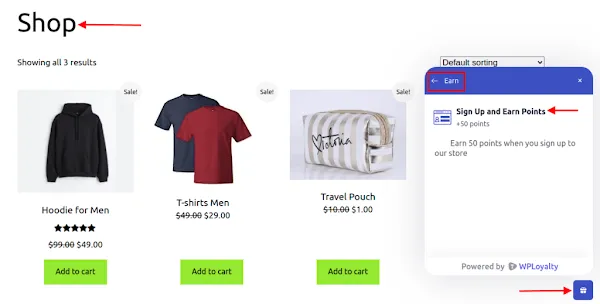
The first order is when a customer is paying the most attention. They just decided you were worth trying. Give them bonus points on that order, on top of your normal rate, and follow up with a message (on-site or email) showing how close they already are to their first reward.
Two things happen. They see a payoff waiting, and they learn early that buying from you earns something. That’s the behavior you want to build.
Most plugins let you apply the bonus to first orders only. If margins are tight, set a minimum order value first, say double points above a certain amount.
2. Build VIP Tiers
Sort customers into levels, Silver, Gold, Platinum, or whatever suits your brand, based on lifetime spend, orders, or points. Each level is worth more than the last:
- a higher point-earning rate
- exclusive discounts or free shipping
- early access to sales and new drops
Anyone sitting just below the next tier will often place another order to reach it, and the named levels give steady customers something to hold onto. Show people where they stand and how far the next level is.
Set entry rules by spend, orders, or points, give each tier its own earning rate and perks, and show tier progress on the account page.
3. Reward Referrals
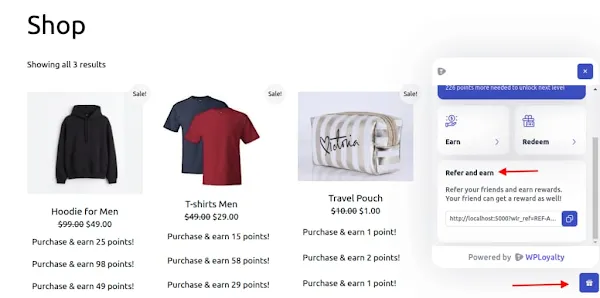
Your happiest customers already recommend you to friends. A referral campaign gives them credit for it. Each customer gets a unique link or code. When a friend uses it and completes an order, both sides get a reward, usually points for the referrer and a discount for the new buyer.
Referred customers convert better and trust you faster, because a friend vouched for you. Your existing customer feels appreciated. And the leads cost a fraction of paid traffic.
Turn on referral tracking that ties orders to links or codes, reward both sides, and set a minimum order value so referrals stay profitable. A count of friends invited and rewards earned, shown in the dashboard, keeps people sharing.
4. Win Back Inactive Customers
Every store has customers who bought regularly and then stopped. Decide what “inactive” means for you, 60 or 90 days with no order is common. When someone crosses that line, tag them and send an offer if they come back within a set window.
“We miss you, here are some bonus points waiting” reads as personal, and the deadline gives them a reason to act. Reactivating a past customer usually costs less than acquiring a new one.
Make the comeback offer a little richer than your everyday earning rate. A lapsed customer has already settled into not buying, and a standard few percent off won’t shift that. Bonus points worth 10 to 15% of a typical order tends to be enough to move them.
Connect your loyalty system to your email marketing automation tool, segment by last order date, award the bonus on their return, and remind them the reward is about to expire.
5. Reward for Product Reviews and Photos
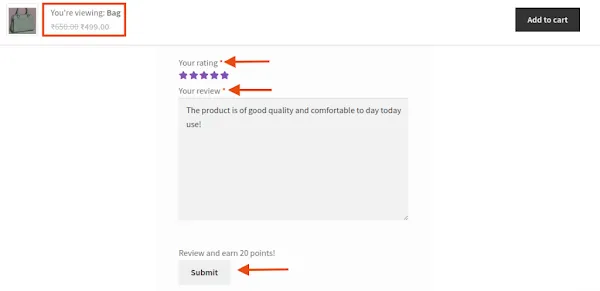
New visitors lean on what past buyers said. So reward the content you want more of: written reviews, photo or video reviews, a shared purchase on social.
Reward it and you get more of it. You also build up real content for your own emails and ads. Photo and video reviews are worth more to you than text, so pay more for them. A written review might earn 50 points; a photo review, 150. You get stronger proof and something you can reuse.
Set clear rules on what qualifies, and cap how often someone earns points for the same action so nobody games it. A review request sent a few days after delivery, linked to a points reward, does the work here.
6. Celebrate Milestones
Reward customers when they hit a moment: one year since their first order, their 5th or 10th order, or a lifetime-spend threshold. The reward can be bonus points, a personal coupon, or access to something exclusive.
Milestones feel personal because they’re tied to the customer’s own history with you. “That’s your 5th order, thank you” is a nice message to get, and one with an expiry date often turns into the next order. Track lifetime points, orders, or spend, and set the reward to fire when the number’s hit.
7. Run Limited-Time Bonuses
Short bursts work when you need a push: a slow month, a launch, a holiday. Double points all weekend, triple points on new arrivals, or bonus points over a spend threshold.
The deadline does the work. A customer on the fence gets a reason to buy this week. Set the campaign to start and stop on its own dates, point the bonus at specific products or categories when you want the attention there, and keep it visible on banners, product pages, and emails.
How to Choose Which Campaign to Launch First
Which one fits depends on where your store is right now.
If you’re newer or your repeat rate is low, start with the first-order reward and the review campaign. Both work on the traffic you already get, and neither costs much to run.
If you have a solid base of regulars, VIP tiers and milestones give them room to climb and a reason to keep spending.
If your year runs on launches and seasons, the limited-time bonus will do the most for you. Line it up with the calendar you already work to.
Got a big email list but flat repeat orders? Pair win-back with referrals. The audience is already there; these two turn it into orders.
You don’t have to pick just one forever. Get one campaign working, learn how your customers respond, then layer the next one on.
Setting Point Values So the Program Doesn’t Eat Your Margins
Two numbers decide whether the program pays for itself: how many points a customer earns per dollar spent, and how much a point is worth when they redeem. Work them out together before you launch, not after.
Say customers earn 1 point per dollar, and 100 points takes $5 off. Someone who spends $100 earns 100 points, worth $5 back. That’s an effective 5% discount on repeat orders. 5% is comfortable on a $60 candle with healthy margins and painful on a $15 phone case. Run it against your real margins, not a round number that sounds generous.
Put an expiry on points too. 6 or 12 months of inactivity is a common setting. It stops unredeemed points from stacking up as an open liability, and it gives lapsed customers a reason to return before the balance disappears.
Common Ways Loyalty Programs Go Wrong
Most of the failures look the same:
- Points worth so little nobody redeems them. If 500 points gets someone a dollar off, they’ll never engage.
- Points so generous they cost you the margin you were trying to protect. This one’s the expensive mistake.
- No expiry, so points pile up as a liability and the program loses any urgency.
- Rules a customer can’t follow. If they can’t tell how they earn or what they get, they tune the whole thing out.
- Every campaign live at once. Pick one or two, get them working, add more later.
None of these are hard to avoid, but they’re easy to walk into when you set the program up once and never look at it again.
A Few Things That Make Any of These Work
Show the point balance where customers look: product pages, cart, checkout, and the account area. If they always know where they stand, they keep going.
Don’t make every reward a discount. Free shipping, early access, free samples, and exclusive bundles feel more valuable and cost your margins less than another 10% off.
Tell non-members the program exists. Put it on banners, in post-purchase emails, and on social, with a one-click join at checkout or login.
Then watch the numbers: repeat purchase rate, average order value, redemption rate, and referral performance. They tell you which campaigns earn their place and which need work.
Where to Start
None of this needs custom development. A WooCommerce loyalty plugin runs points, tiers, referrals, and scheduled campaigns from your WordPress dashboard. Pick one campaign, set the rules so both sides come out ahead, and see how your customers respond before adding the next.